
Galuchat vs Crocodile: Two Exotic Leathers, Two Different Crafts
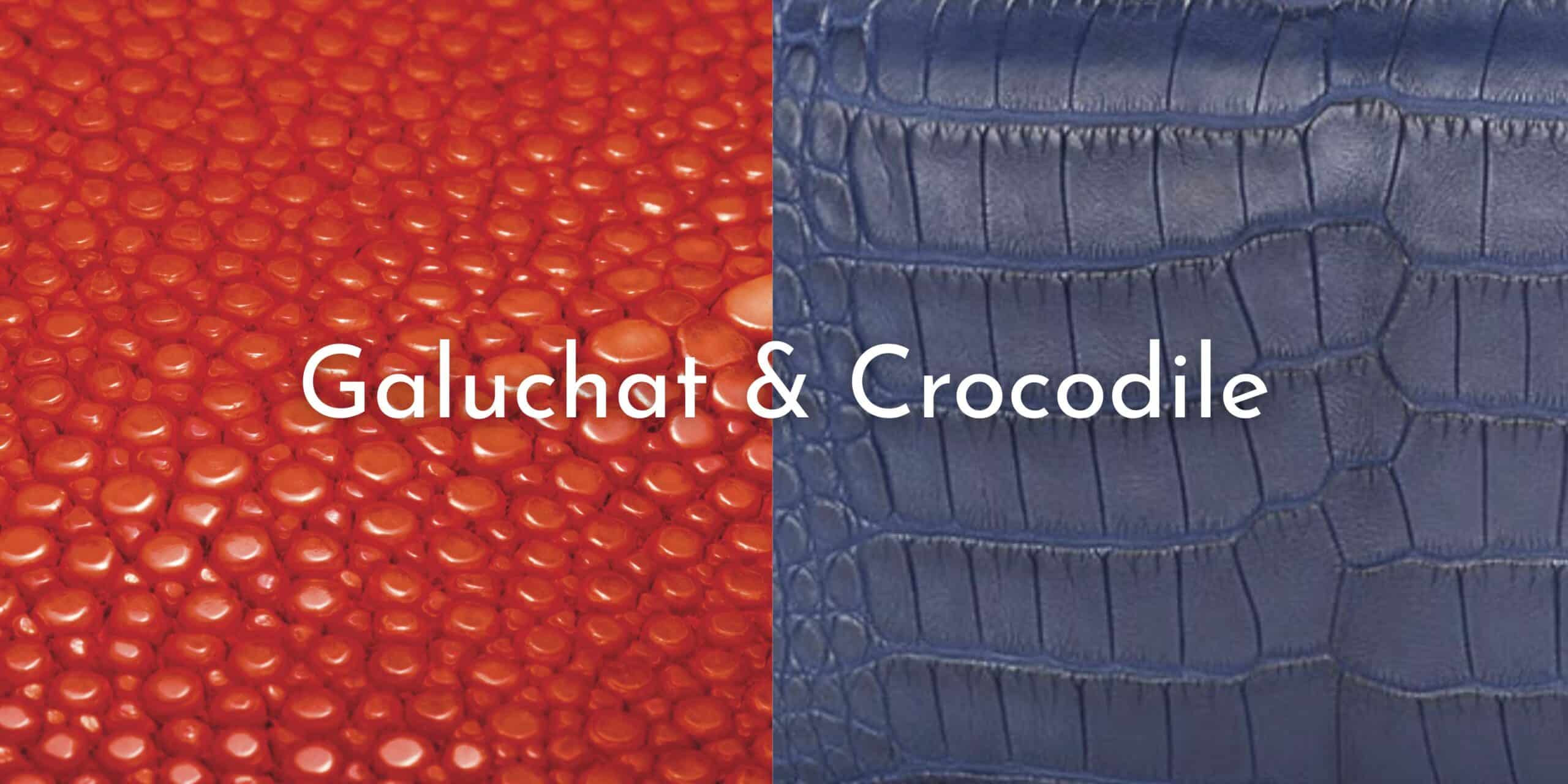
Ask a leather goods buyer to name two of the most prestigious exotic skins and you’ll almost always hear the same pair: crocodile and galuchat, also known as shagreen or stingray leather. Both are prized by luxury houses. Both command a price far above calfskin or even the finer cattle leathers. But beyond that, they have almost nothing in common. The texture are different, the tanning is different, the tools a maker reaches for are different, and the finished object behaves differently in your hand for years afterward.
This isn’t a “which is better” comparison. It’s a look at what each material actually asks of the people who work it, so you understand what you’re paying for.
Where They Come From
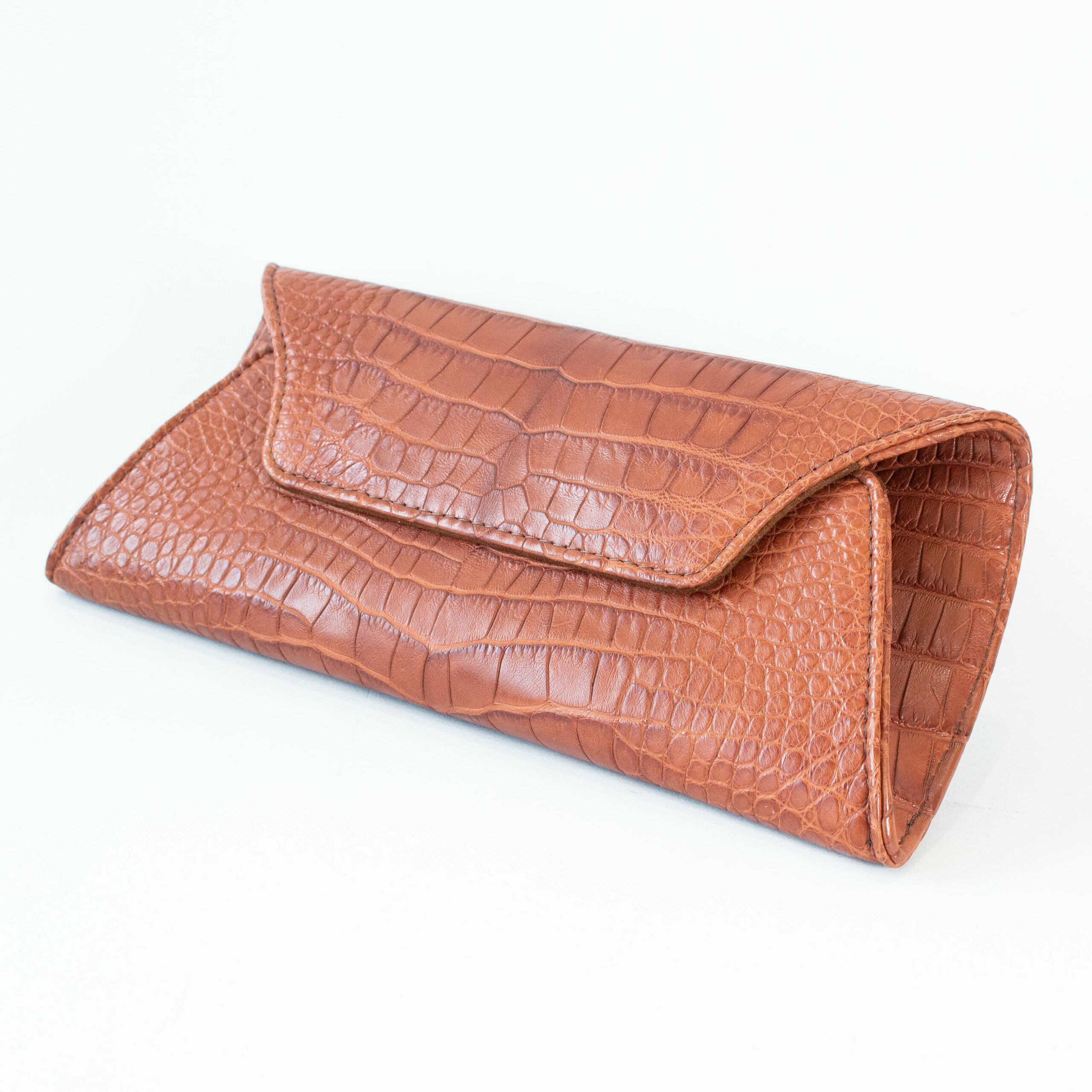
Crocodile leather comes from any of 23 crocodilian species, tanned and finished into panels large enough to build a bag without visible seams. It makes up less than 1% of world leather production and is CITES-regulated at every step, from farm to finished good.
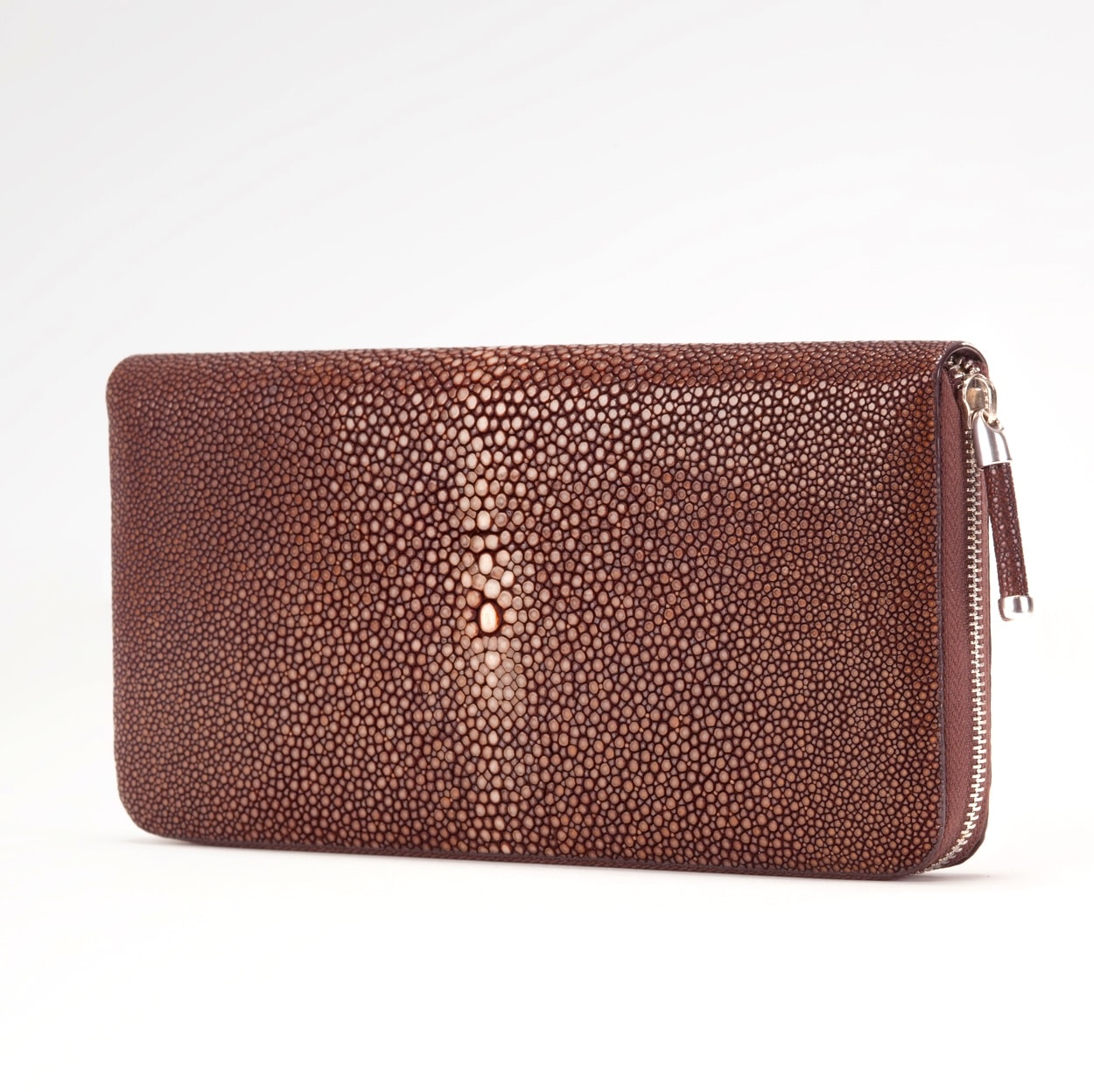
Galuchat, better known as stingray or shagreen, comes from ray species also used for meat, mainly sourced through Thailand, Indonesia, and India. Like crocodile, it accounts for under 1% of global leather output. But the hide itself works against volume: a single stingray skin rarely exceeds 3 square feet, so anything larger than a wallet requires piecing multiple hides together.
Sourcing and hide size
Crocodile hides are large. A single skin can yield enough material for a full bag with barely a seam in sight, which is part of why crocodile bags read as so seamless and monolithic.
Stingray hides are smaller, on average 11 inches wide, and irregularly shaped. Most workshops piece several hides together to build anything larger than a wallet or a small pouch, and the “crown” at the center of the hide, the densest and most prized part of the skin, typically gets centered as a feature rather than hidden. This is one reason larger galuchat pieces are harder to find done well: it takes real planning to avoid visible seams.
Tanning: Two Different Types of Skin
Crocodile tanning is a highly skilled process but a relatively standardized one. The skin is softened and tanned like any other hide. The hide is graded on scale symmetry, size, and the presence of flaws like scars or bullet holes before it ever reaches a tannery equipped to handle it properly.
Galuchat isn’t leather in the traditional sense. Stingray skin is covered in small calcified nodules, essentially tiny plates of dentin, the same material found in teeth. This makes stingray tanning a narrower specialty, requiring more durable equipment and deep dyeing.
Two types of stingray leather are found on the market: polished flat, or left natural with a pebble-like texture. The latter is harder to dye evenly and often requires spraying. “Garment-grade” stingray, intended for goods that need to fold and flex like wallets, has to be treated to become softer and thinner than the raw hide, often through flat polishing.
Worth noting: because tint varies slightly batch to batch, and bead configuration varies hide to hide, no two galuchat pieces are ever perfectly identical. Crocodile, by contrast, is graded and matched specifically to minimize that kind of variation across a piece.
Cutting and construction
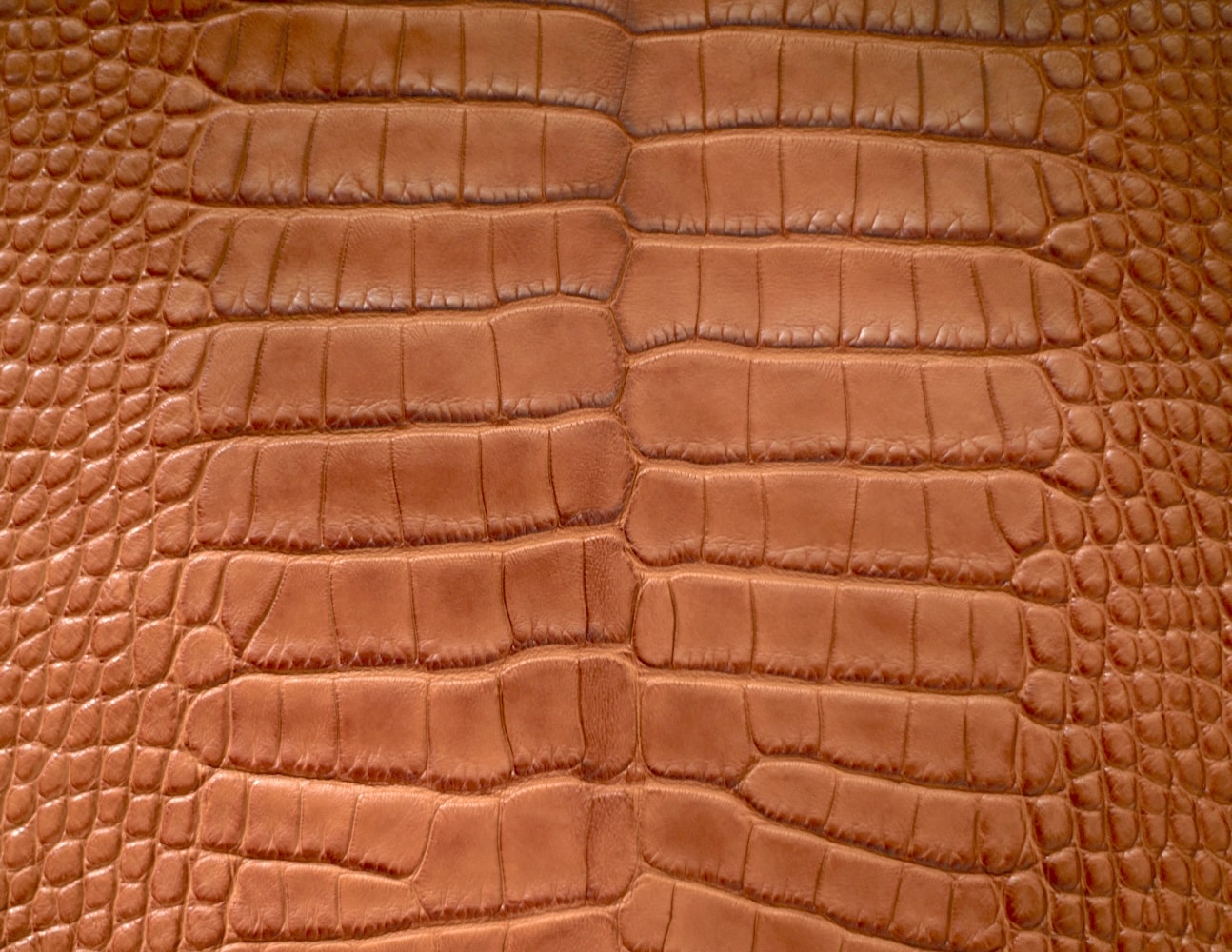
With crocodile, the challenge is aesthetic. A skilled maker chooses which section of the hide, belly, flank, or tail, suits the piece, then matches scale size and orientation across every panel. Tail cut scales don’t fold well, so they’re avoided on folding wallets. Reputable workshops never mix panels cut from different parts of the same hide onto one product, because the mismatch shows.
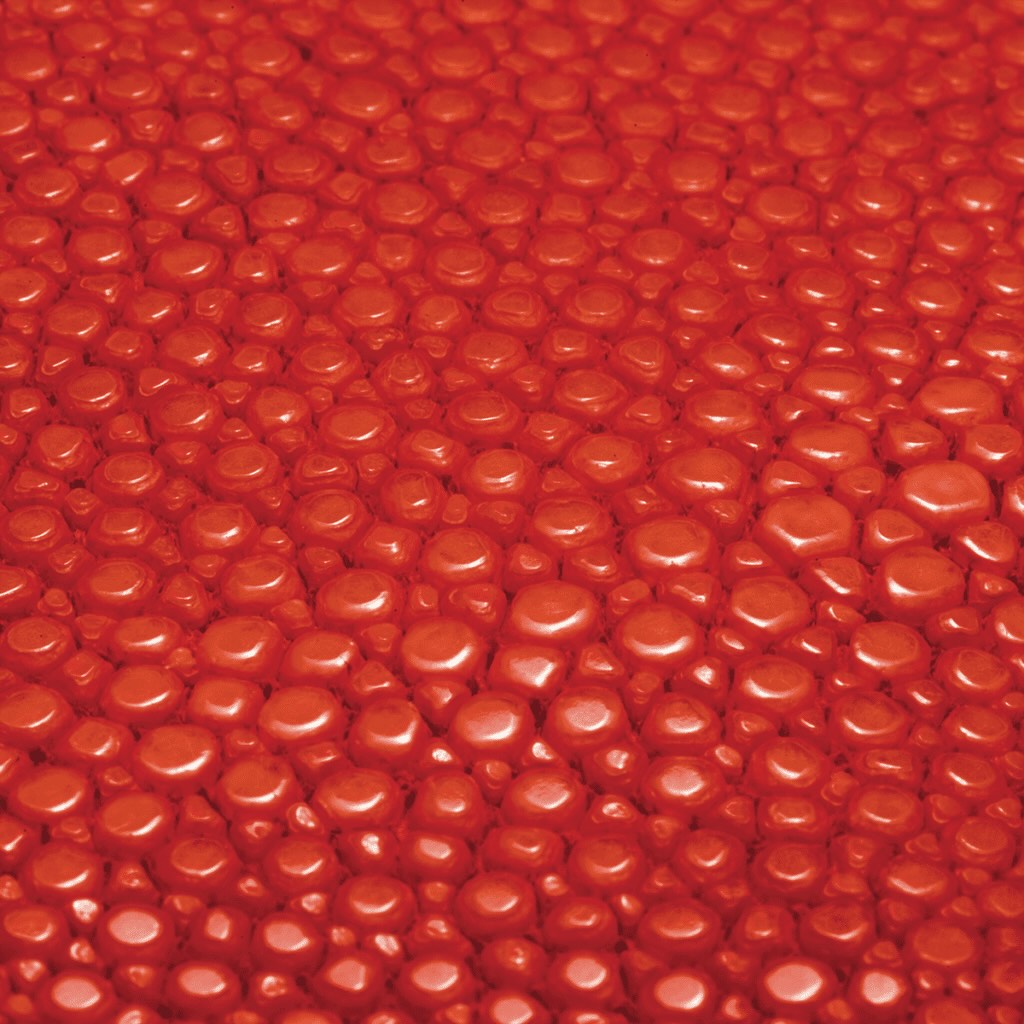
With stingray, the challenge is mechanical. Those same calcium nodules that make it nearly indestructible will dull a standard blade and shred sewing thread. Makers often cut with shears rather than a knife, and use thicker thread built to survive the material. Edges usually can’t be folded the way a calfskin or crocodile edge can, so the stingray leather pieces are more often glued, stitched and/or the nodules are sanded flat and finished with edge paint.
Durability
Crocodile is durable in its own right and ages well, but it isn’t scratch-immune and needs regular conditioning to avoid cracking over time. Its durability comes more from the thickness and structure of the hide than from the surface itself.
Stingray‘s calcified structure makes it close to scratch-proof, a property no other leather really shares. Run a key across it and it won’t mark. That density is also what makes it resistant to punctures, which is part of why it’s held up historically for items that see daily handling.
Grading and Quality
The two materials are judged on almost entirely different criteria.
Crocodile is graded on scale symmetry, size, boxiness (larger, more square scales generally rate higher), and defect count, things like scars or bullet holes. On finished goods, quality shows in how well panels are matched across the piece and whether the maker chose the right cut for the item.
Galuchat is graded on the size and clarity of the central crown, the largest and most prized bead formation on the hide, along with nodule uniformity, polish, and dye evenness. Whether a piece uses raw or sanded galuchat is also part of how it reads to someone who knows the material.
Cost, and what actually drives it
Both materials are expensive for the same root reason, scarcity, but the cost drivers aren’t identical.
Crocodile‘s price is tied closely to prestige and hide size, which is why it dominates large leather goods and shoe uppers.
Galuchat‘s price is driven more by small hide yield and the narrow, specialized labor required to tan and work it, rather than the same prestige premium.
Choosing Between Them
Crocodile is the material to reach for when you want a large, seamless panel and a finish that reads as classic luxury at a glance. Its main ongoing demand is care: conditioning, and protection from drying out.
Crocodile makes sense when a piece calls for large, seamless panels: bigger bags, structured goods, anything where an uninterrupted expanse of leather matters. Its scarcity and the skill required to match panels across a piece are what drive its prestige.
Galuchat is the material to reach for when durability matters as much as looks, a wallet or card holder that lives in daily use for a decade and ages well. Its demand is upfront: sourcing the right hide, and finding a workshop that actually knows how to cut and finish it, since so few do.
Galuchat’s small hide size is often treated as a limitation, and for large bags, it is one. But for wallets and small leather goods, this is where galuchat has always been at its best: the crown motif becomes a feature rather than a constraint, centered and framed rather than pieced around.
Neither material is simply better. They ask different things of the people who work with them, and they reward different kinds of attention from the people who carry them.
AKNAS’ Unique Leather Goods
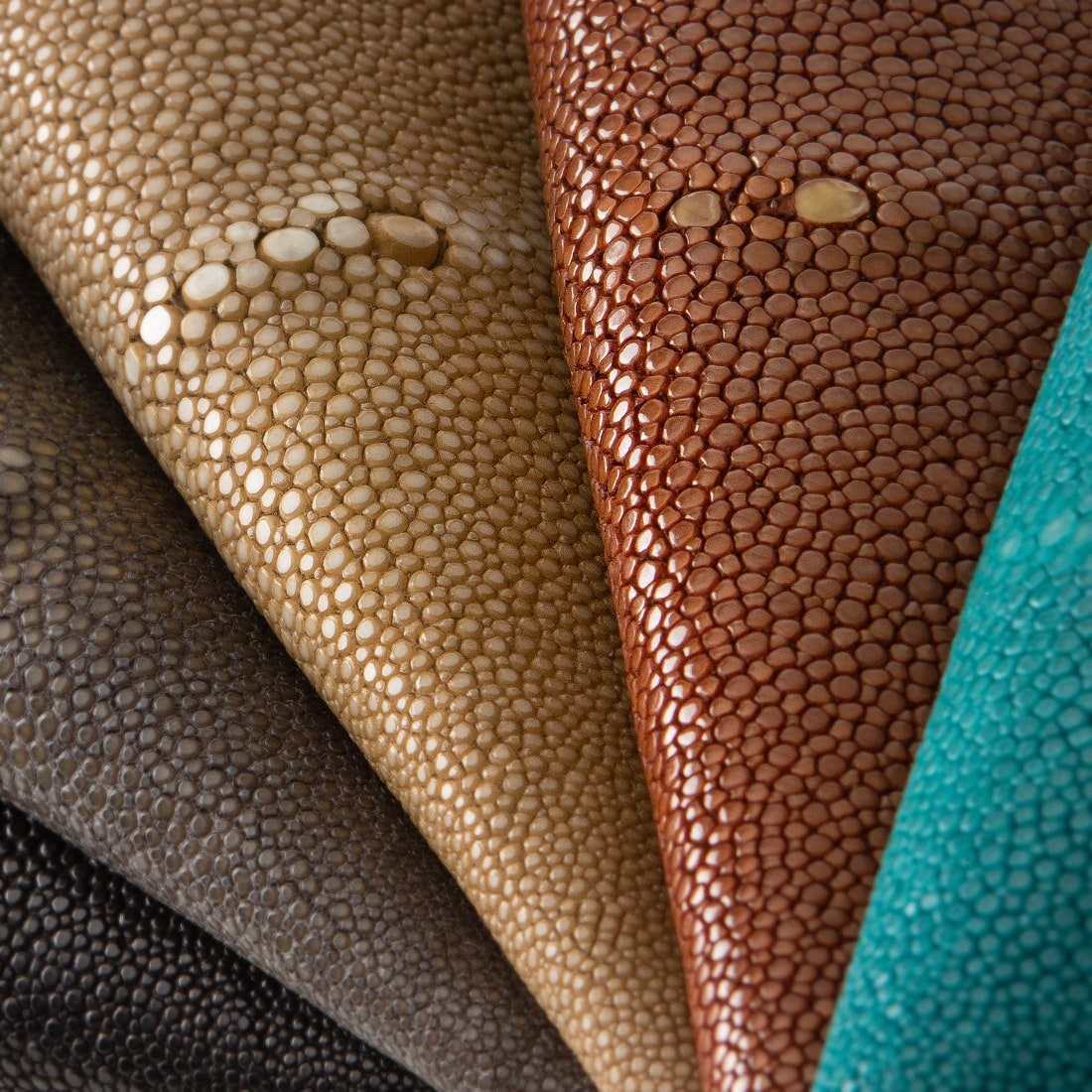
AKNAS works with a flexible, flat-polished galuchat that has gone through an extended tanning process known internally as deep dyeing, repeating the dye bath up to four times over roughly two weeks. The result is a color that runs through the full thickness of the hide and beads rather than sitting on the surface, so no additional paint spraying is needed.
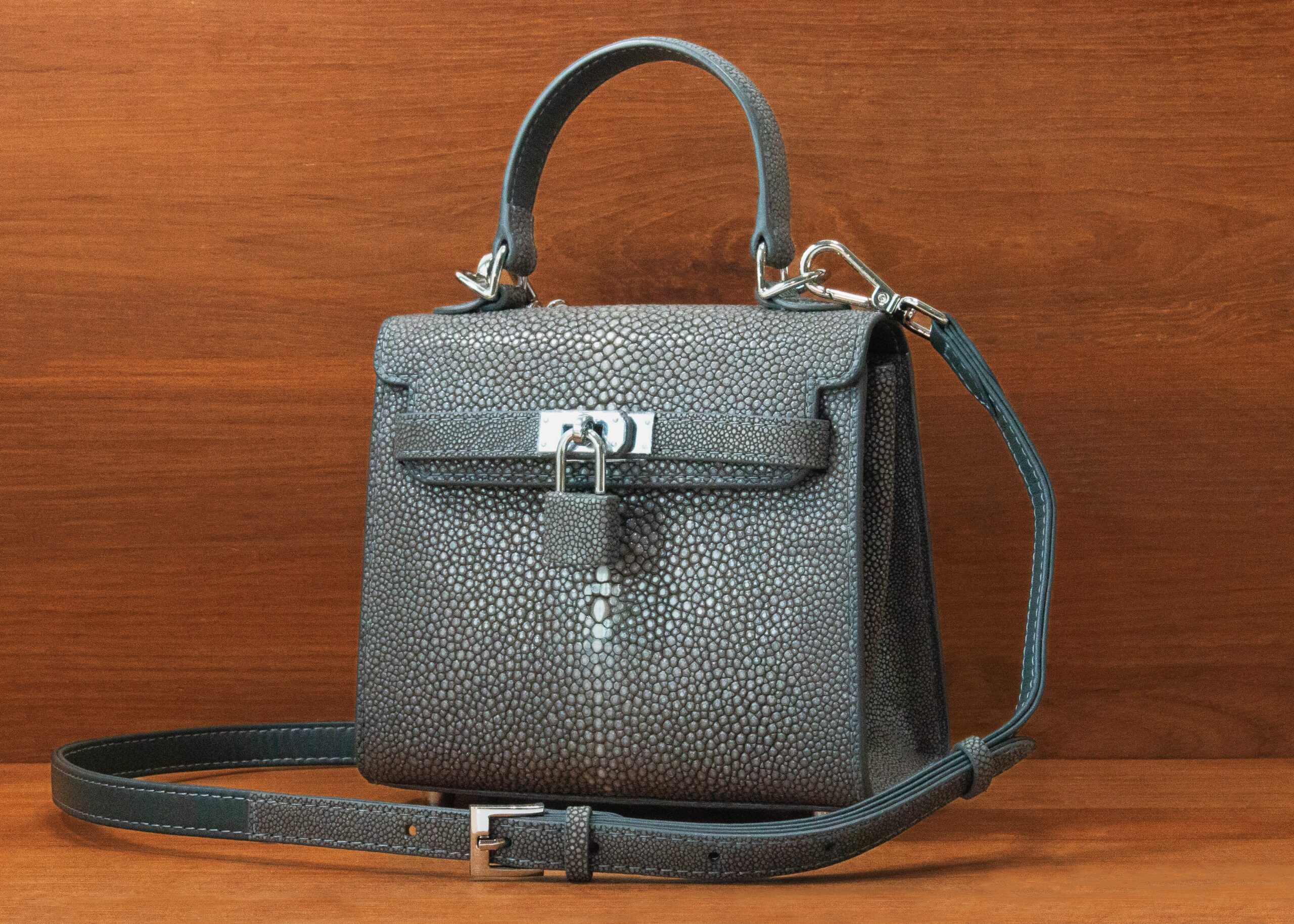
Over 20 years, AKNAS has been pushing the boundaries of what galuchat can offer, developing techniques to handle edges and panel connections with intention: seamless where the piece calls for restraint, or deliberately visible where they become part of the design. Either way, it’s a choice, not a compromise dictated by the hide. Its curated collection of small bags, crafted from larger stingray hides, reflects this savoir-faire.