Dry Galuchat vs Soft Galuchat: Two Finishes, One Hide
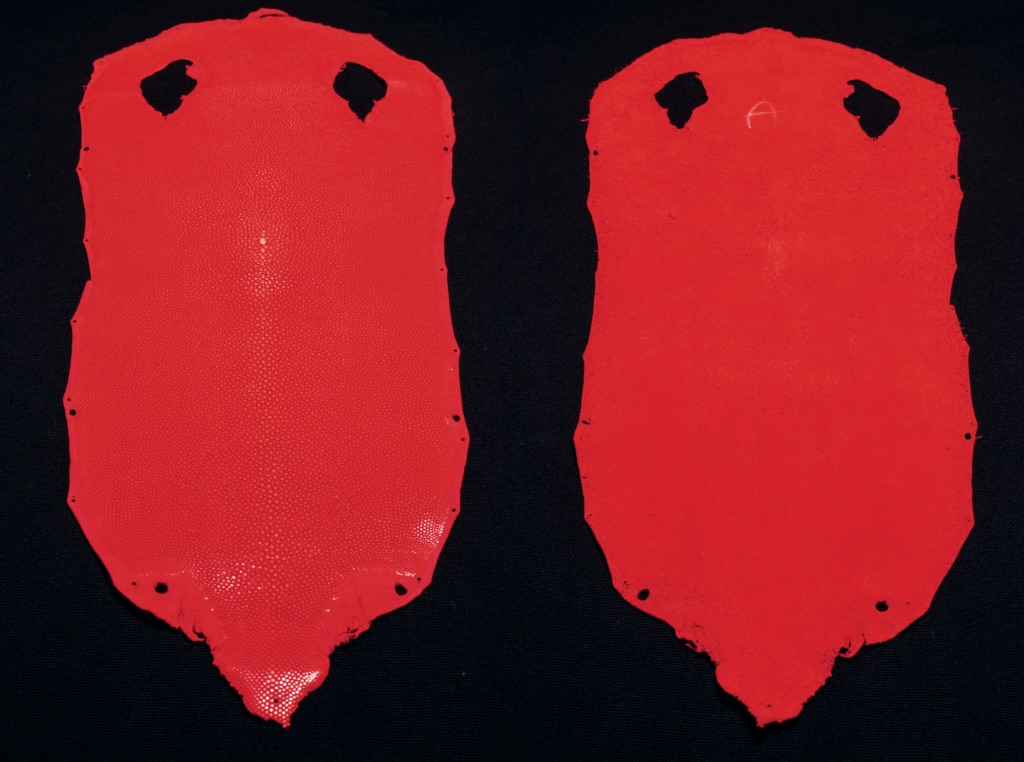
Buyers sourcing galuchat for the first time are often surprised to learn that the rigid, glass-like tabletop veneer they saw at a furniture showroom and the supple, foldable wallet in a boutique display case can come from the very same species of stingray. Nothing about the raw hide changes between the two. What changes is everything that happens to it afterward.
This is a look at that difference: what “dry” and “soft” galuchat actually mean, why each exists, and why one can’t simply substitute for the other.
Same hide, two very different jobs
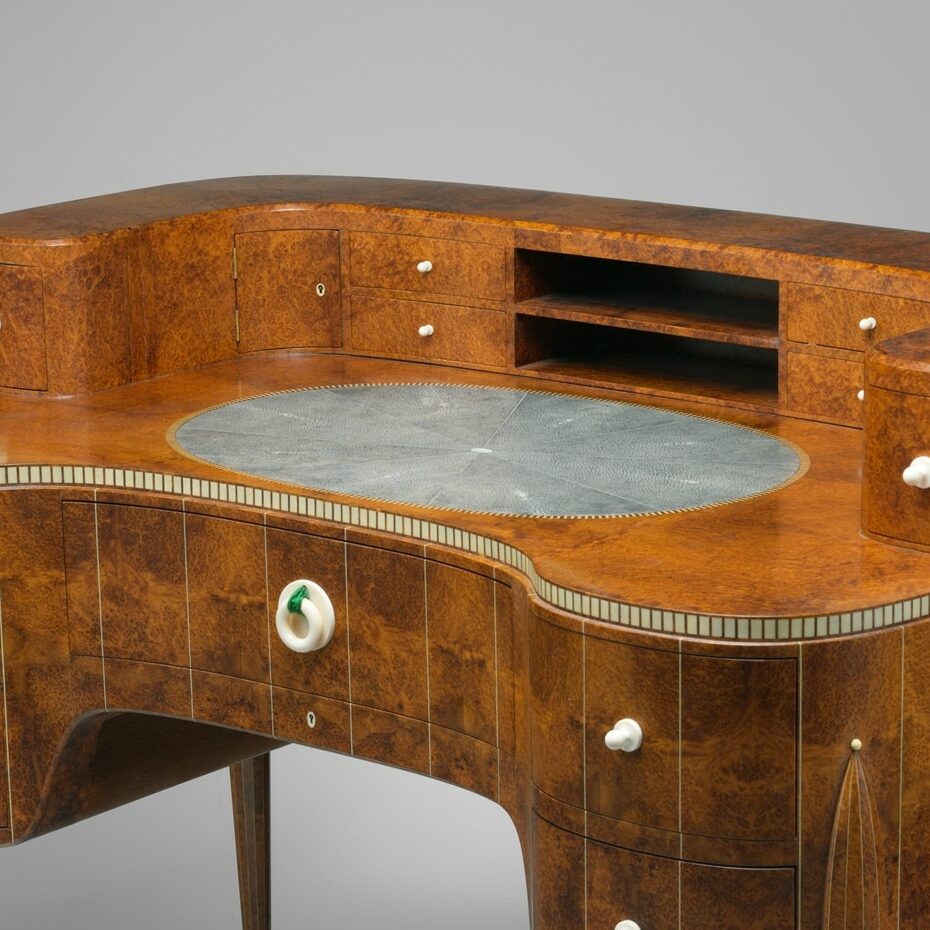
Furniture-grade galuchat, sometimes called dry or hard galuchat, is finished to stay rigid. It’s the material behind tabletop veneers, box inlays, wall panels, cabinet fronts, and the handles of fine knives and swords. Rigidity here isn’t a limitation, it’s the point: furniture makers glue the skin flat onto a wood or MDF substrate rather than needing it to bend, so a hide that lies flat and holds a hard lacquer finish is exactly what the work calls for.
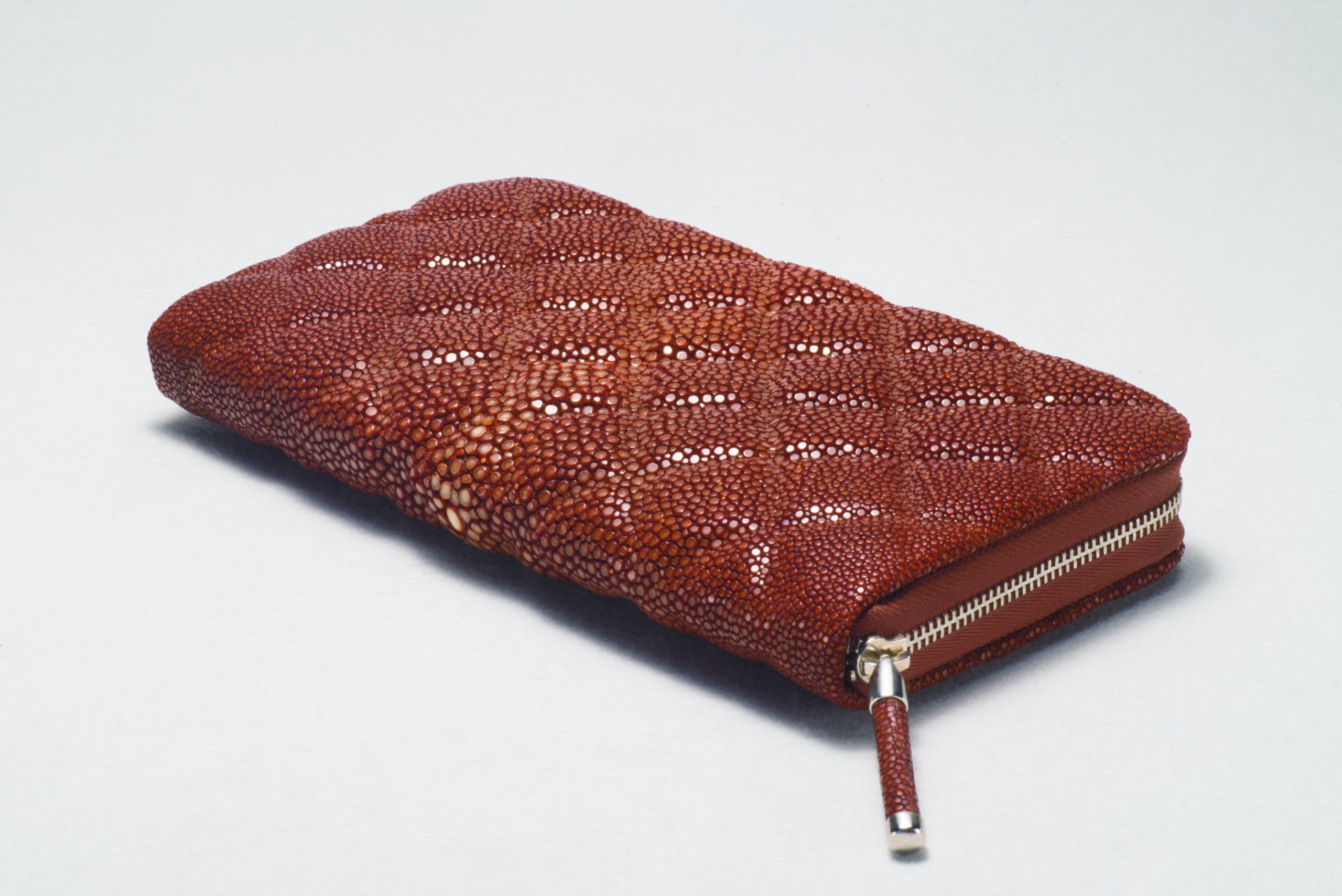
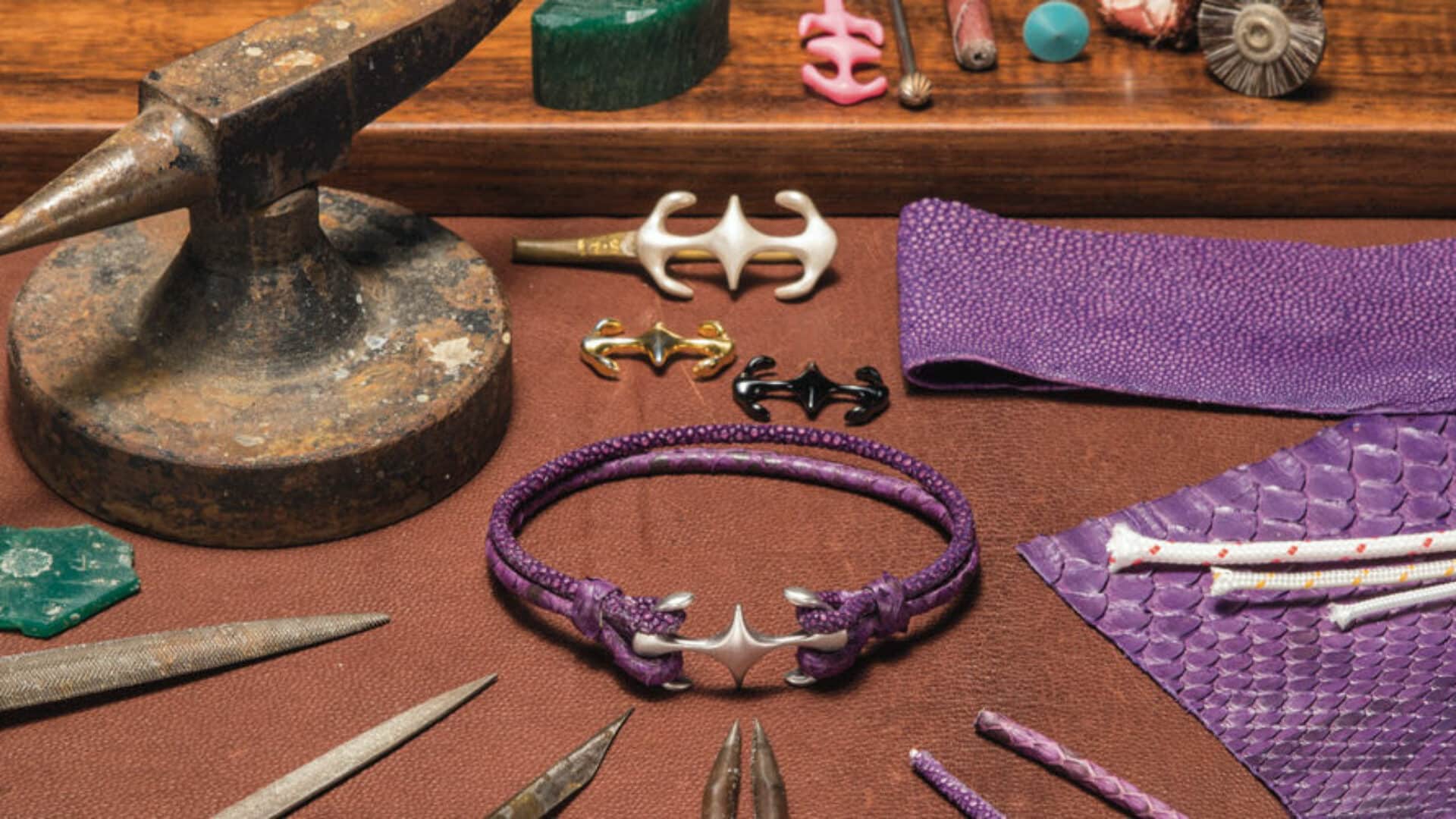
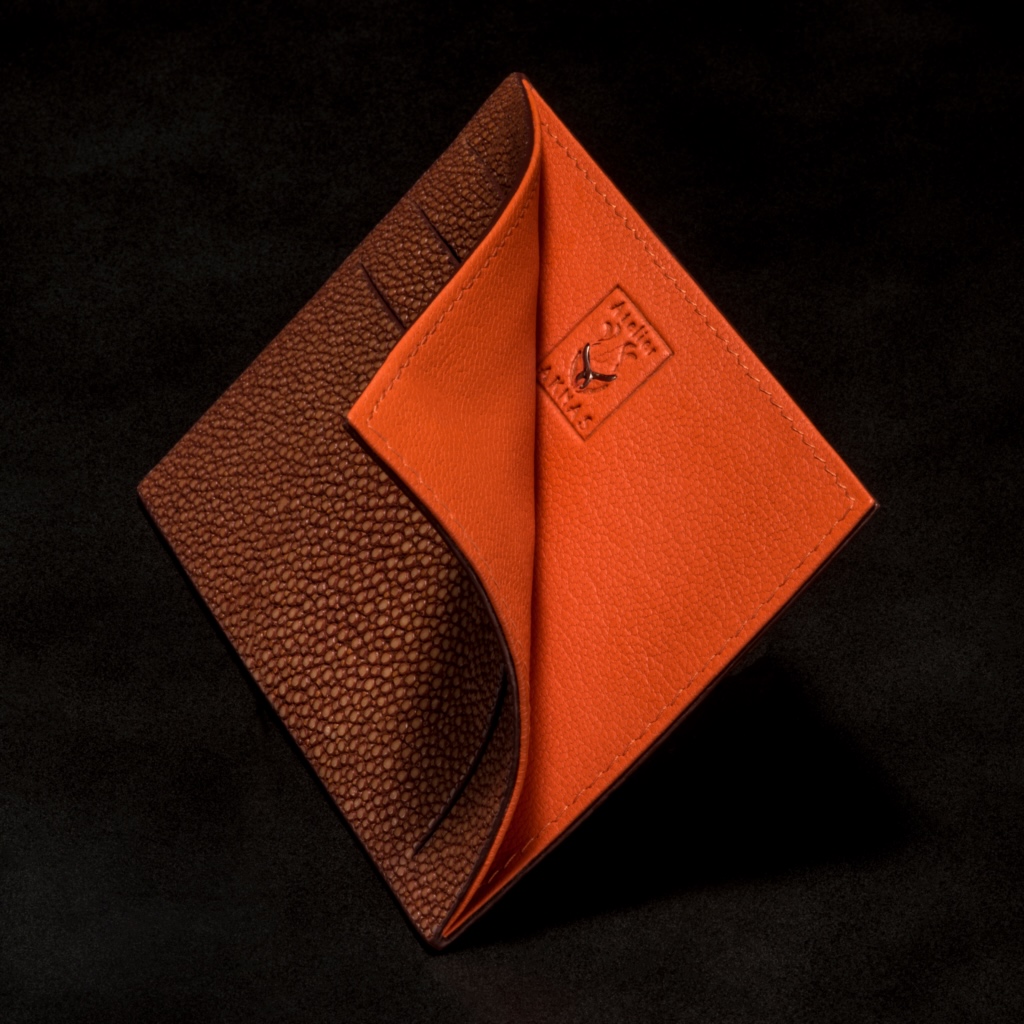
Accessory-grade galuchat, the soft or garment-grade version, is finished to do the opposite: fold, stitch, and shape around gussets, corners, and hardware without cracking. This is what wallets, bags, belts, and watch straps are built from, anywhere the leather actually needs to move with the object it’s covering.
What actually differs: the tanning, not the hide
Crocodile hides are large. A single skin can yield enough material for a full bag with barely a seam in sight, which is part of why crocodile bags read as so seamless and monolithic.
Stingray hides are smaller, on average 11 inches wide, and irregularly shaped. Most workshops piece several hides together to build anything larger than a wallet or a small pouch, and the “crown” at the center of the hide, the densest and most prized part of the skin, typically gets centered as a feature rather than hidden. This is one reason larger galuchat pieces are harder to find done well: it takes real planning to avoid visible seams.
Tanning: Two Different Types of Skin
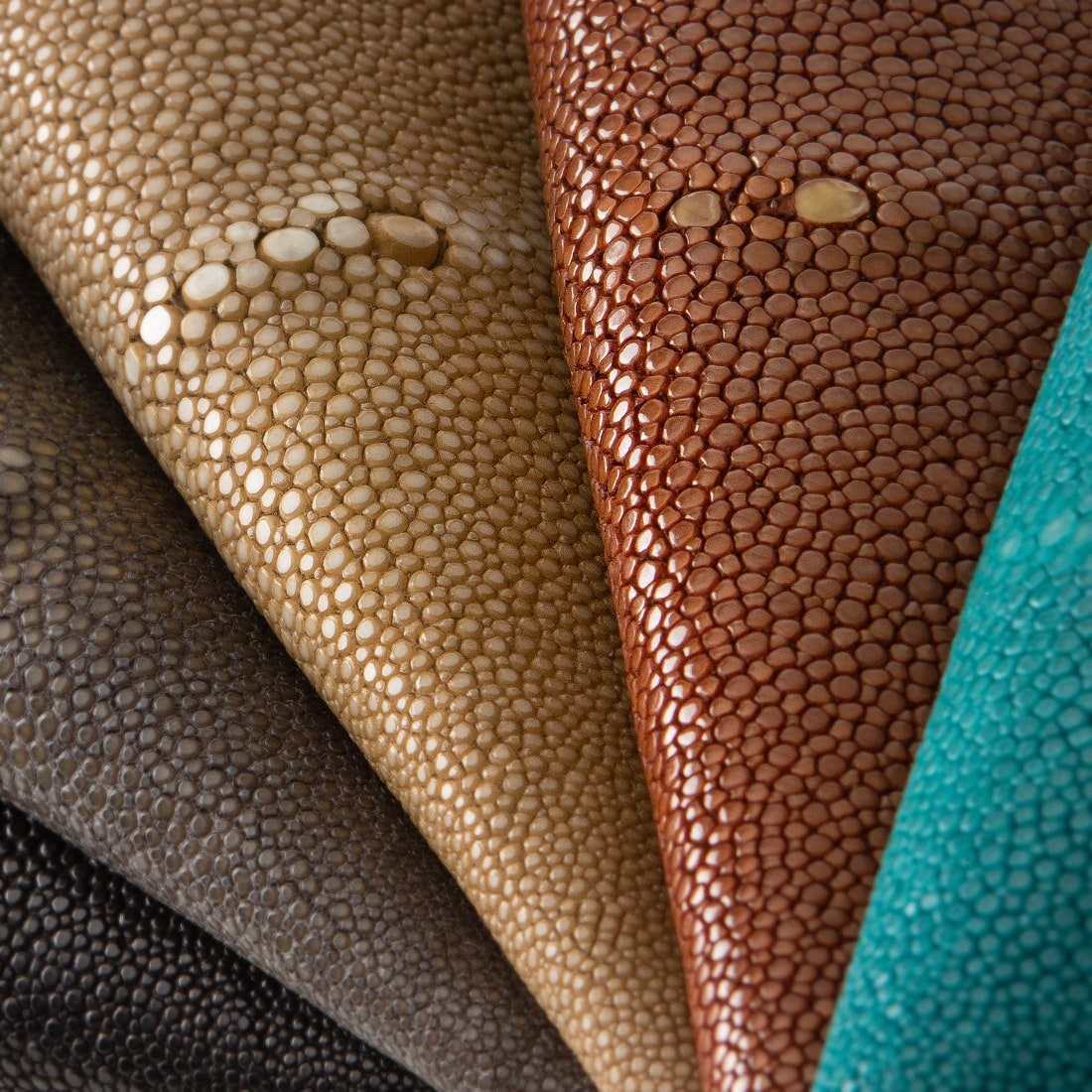
Every stingray hide has the same signature feature at its center: a cluster of small, tightly packed calcified nodules, often called the “pearl,” made of the same dentin-like material as tooth enamel. That pearl stays hard no matter how the rest of the hide is treated. It’s the surrounding tissue, the skin around the pearl, that the tanning process actually changes.
For dry, furniture-grade galuchat, the hide is left closer to its natural state: minimally softened, sometimes closer to vegetable-tanned or simply cured, with the calcite nodules left fully intact and unyielding. The finishing then leans into that rigidity, sanding and polishing the surface to bring the pearl pattern forward before sealing it under a lacquer or shellac, the glassy, jewel-like look most associated with classic galuchat furniture. Because it never needs to fold or take a seam, this grade is also often left thicker than accessory-grade hide.
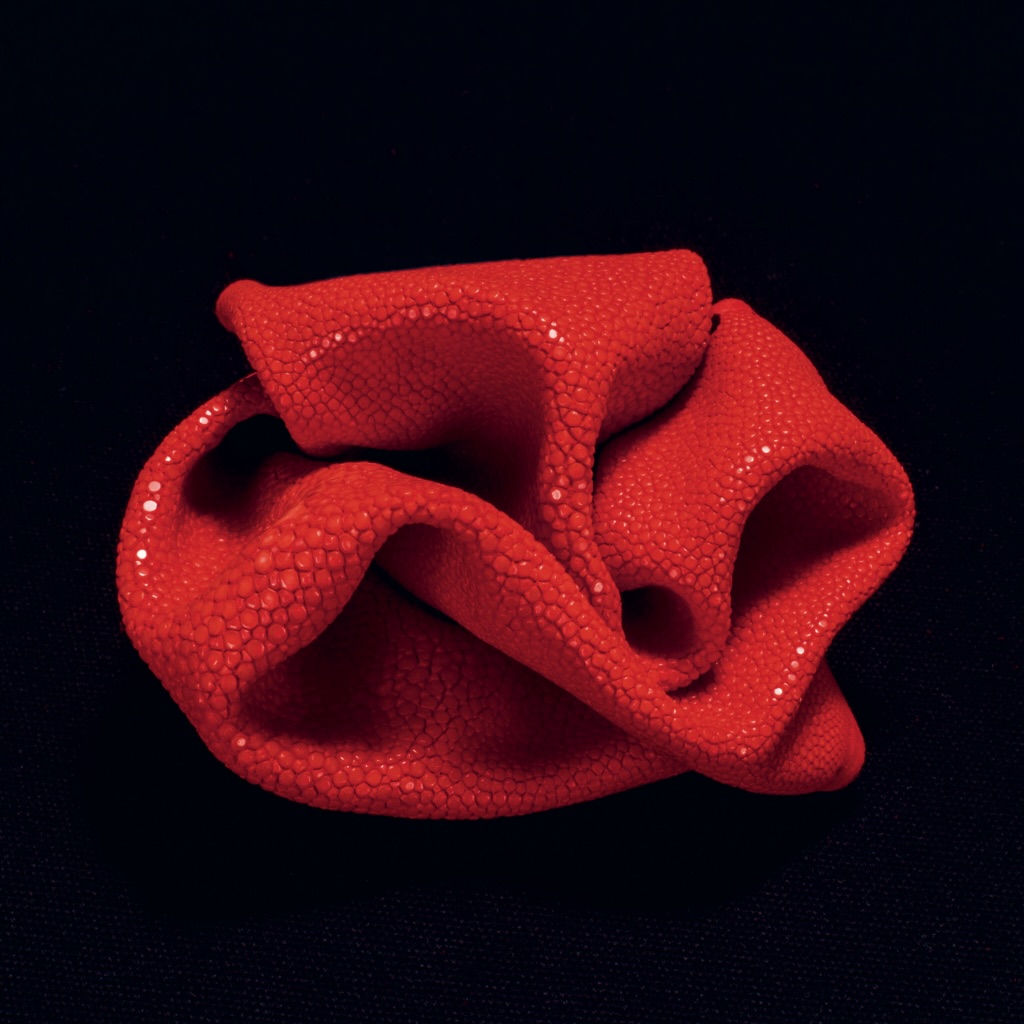
Soft, accessory-grade galuchat goes through a fuller tanning process, closer to how calfskin or lambskin gets finished, plus mechanical softening to work real flexibility into the skin. The surface is still polished to bring out the pearl pattern, but the surrounding leather is dyed and given a flexible top coat so it can bend repeatedly without cracking. It’s also usually skived thinner, or backed with a fabric or leather lining for structural support, since the pearl center is still hard as stone even once everything around it has gone soft.
The trade-off in one sentence
Both grades start from the same hide, so the split isn’t about raw material quality, it’s about what the tanner decides to do with the skin around that hard center. Leave it stiff and it lies flat under a lacquer finish. Soften and thin it and the whole hide can flex and be sewn, while the pearl still reads as a small raised jewel across the surface. Neither choice is a compromise; each is built for the job it’s meant to do.
Choosing between them
If the piece is going to be glued flat and admired from a fixed distance, a tabletop, an inlay, a knife handle, dry galuchat is the right call: it holds a harder finish and shows the pearl pattern at its most polished.
If the piece needs to move with daily use, a wallet that opens and closes, a strap that wraps a wrist, soft galuchat is the only real option. It’s the version built to be handled, not just displayed.
AKNAS’ Approach
AKNAS works specifically with soft, flexible galuchat, since jewelry, accessories, bags, and small leather goods are what we build. Our hides go through an extended tanning process we call deep dyeing internally, repeating the dye bath up to four times over roughly two weeks, so the color runs through the full thickness of the hide and its beads rather than sitting on the surface. Combined with flat polishing, the result is a hide that’s rich in color, smooth to the touch, and pliable enough to cut and sew cleanly, without losing the durability that made galuchat worth reaching for in the first place.