The History of Galuchat: From Ancient Craft to Modern Shagreen
Galuchat has a habit of disappearing and coming back. Across roughly two thousand years, the material now known as stingray leather, or shagreen, has been rediscovered by a craftsman, championed by a patron, celebrated for a generation, then forgotten again, sometimes for a century at a stretch. It’s one of the few materials in decorative arts history with a genuine plot.
Before it had a name
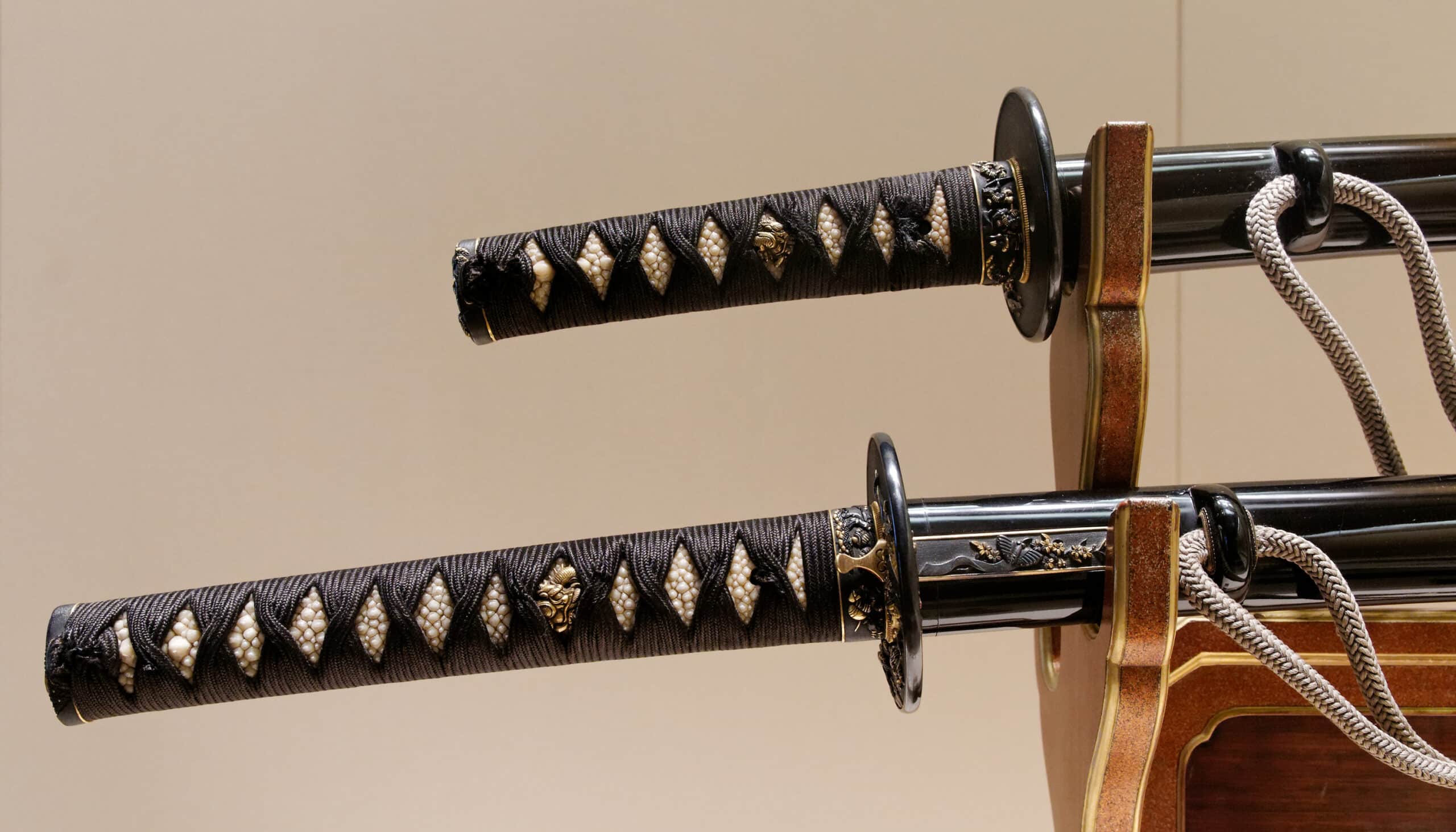
Stingray skin’s use in China is documented back to the 2nd century CE, though the objects themselves rarely survive to examine directly. The earliest artifacts we can actually hold come from 8th century Japan: tanto and katana handles, sword sheaths, pieces of samurai armor made of samegawa (鮫皮), “shark skin” leather. At the time the skin wasn’t tanned and the beads weren’t sanded down, which is exactly why it was chosen. Left rough, it gripped a swordsman’s hand even when wet. That same roughness made it useful as sandpaper for Japanese carpenters, a use that survives today in a much gentler form: sushi chefs still use a small block of it to grate wasabi.
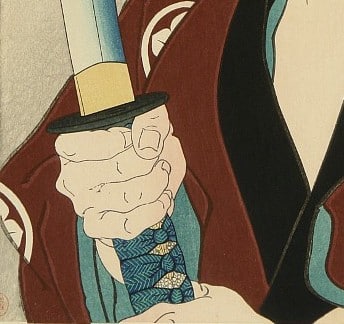
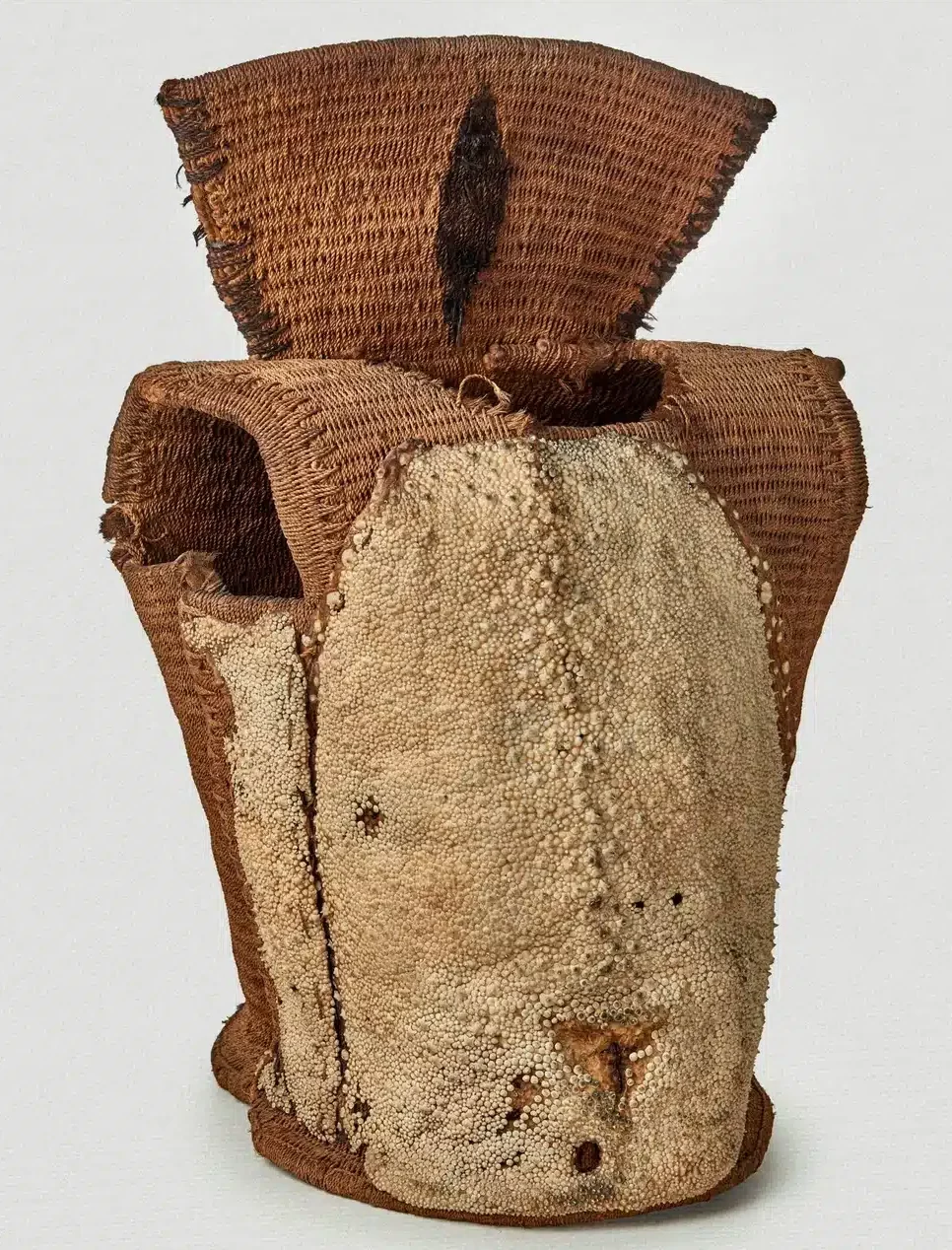
The same protective instinct shows up in places with no contact with Japan at all. Warriors on Kiribati, an island group in the Pacific, wore body armor woven from coconut fiber with a stingray-skin belt or cuirass built into it as a defense against spear thrusts, a tradition still documented as late as the 19th century. Two cultures, on opposite sides of the world and centuries apart, landed on the same idea: this skin is tough enough to wear into a fight.
A Frenchman gives it a name
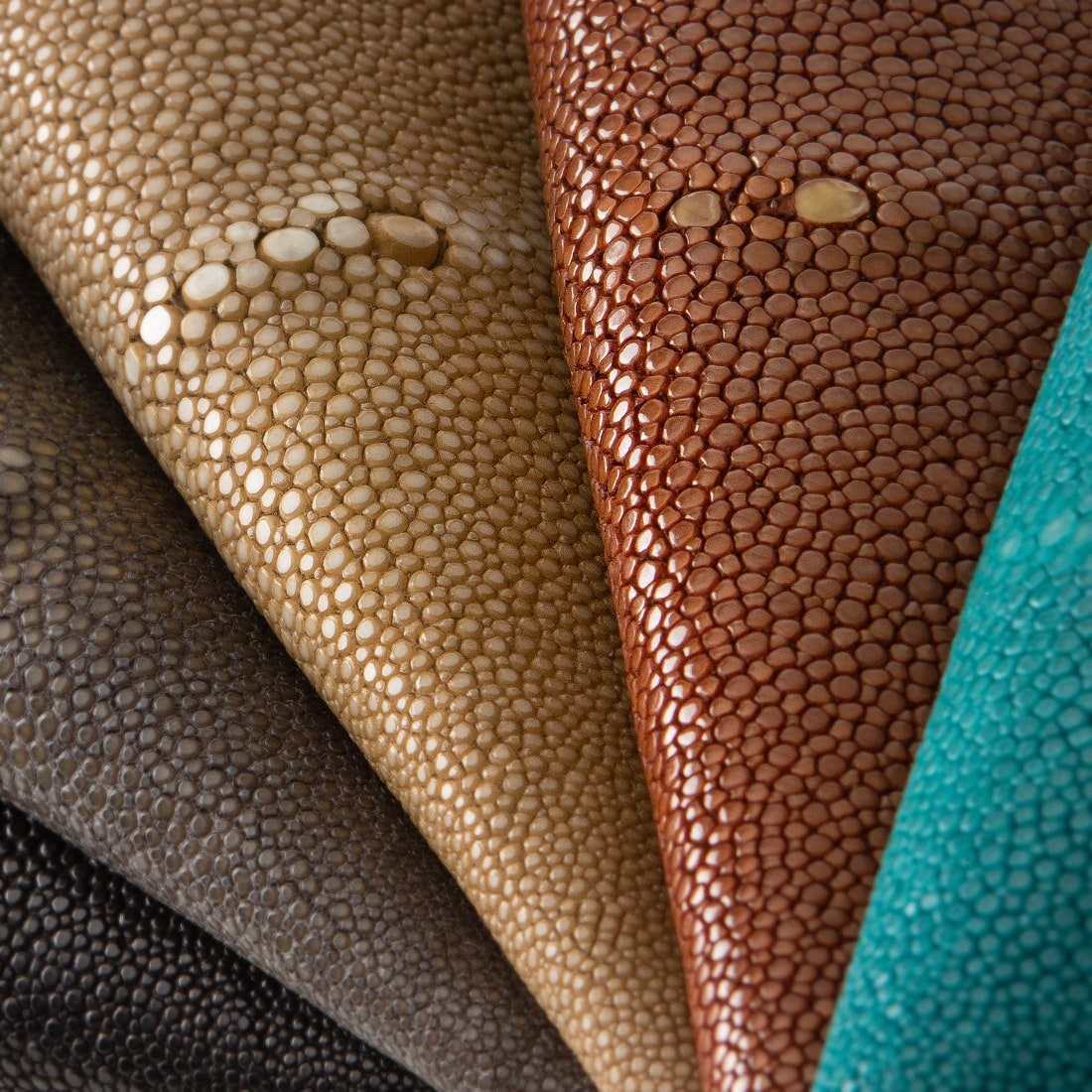
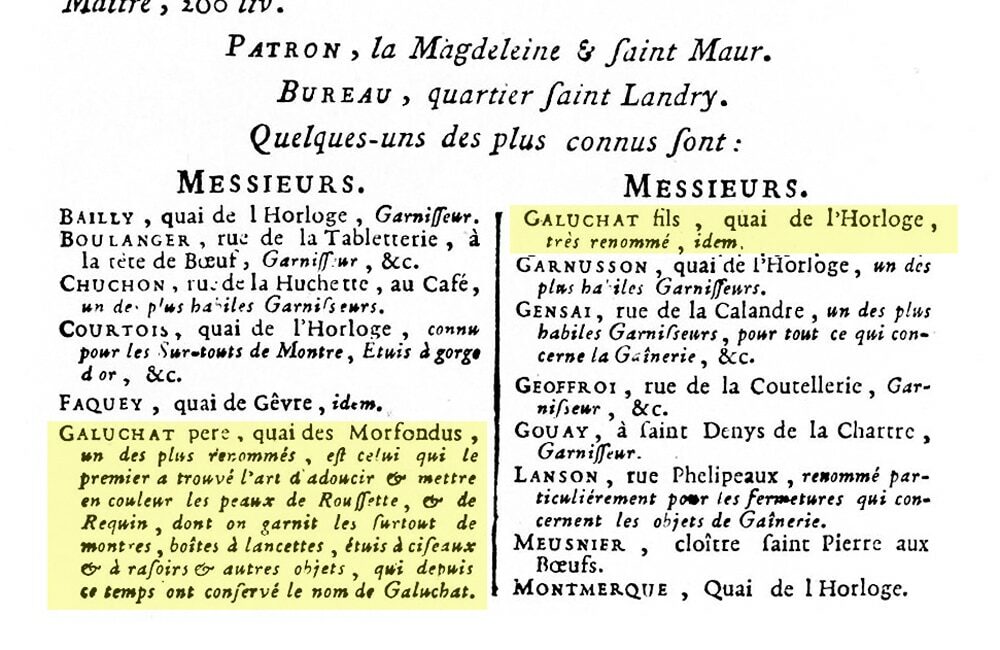
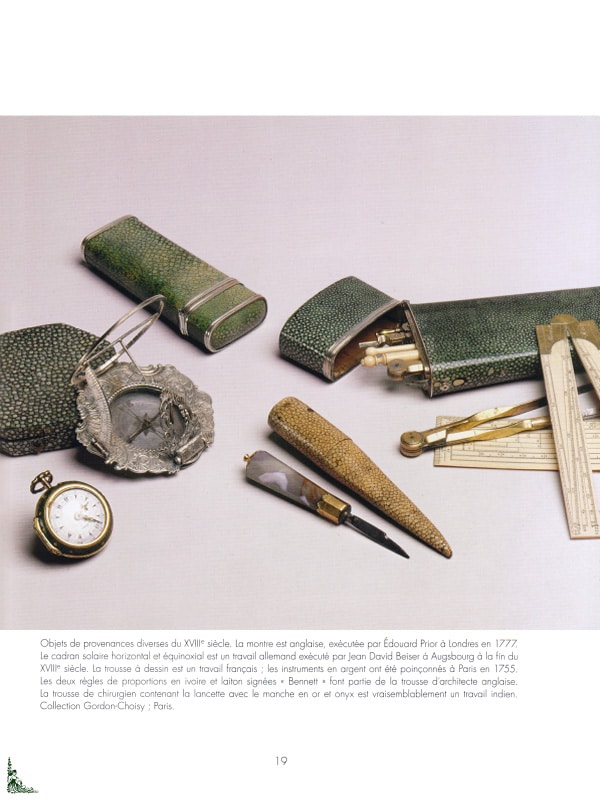
Stingray skin resisted tanning for centuries. Its structure, that dense layer of calcified beads made from dentine and enamel, the same material as tooth enamel, made it stubborn in a way ordinary hides weren’t. It took until the second half of the 18th century for someone to reliably tan and dye it: Jean-Claude Galluchat, a Paris master upholsterer. His most influential customer was Madame de Pompadour, mistress of Louis XV and one of the era’s most consequential patrons of the decorative arts, who had him cover her jewelry boxes in it. The material took his name, worn down over time from Galluchat to galuchat, and for a while it turned up across European high society: snuff boxes, opera glasses, sword grips. Then, like most trends, it faded. By the 19th century galuchat had slipped back into obscurity.
1910: a stroke of luck
The revival starts with an almost accidental find. Legend has it that around 1910, designer Paul Iribe came across old stocks from the era of Napoleon III (1800s). He sketched a piece of furniture and asked his friend Clément Rousseau, a cabinetmaker, to build it in the material. It worked, and it set off a chain reaction that would define an entire decorative movement.
Rousseau became one of the first to bring galuchat back into serious use through the 1920s, alongside Iribe and designer André Groult. A chair of his from around 1921, in rosewood, green-dyed galuchat, ivory, and pale silk upholstery, now held at the Musée des Arts Décoratifs in Paris, showed something new: a material that had only ever covered small boxes in the 18th century was suddenly being applied to entire pieces of furniture.
1925: the Exposition that made it famous
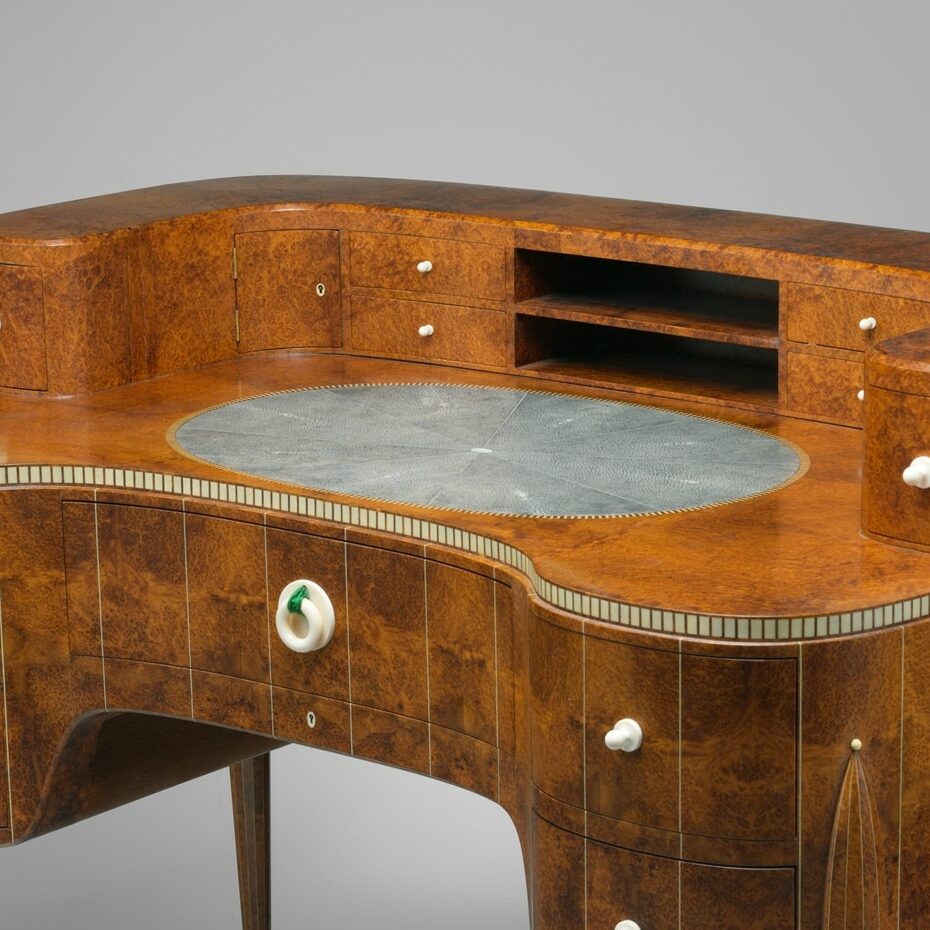
The 1925 Exposition internationale des arts décoratifs in Paris put Art Deco, and galuchat with it, on the world stage. Jacques-Émile Ruhlmann’s pavilion, the “Hôtel du Collectionneur,” became the exhibition’s most talked-about display, filled with his own furnishings alongside a curated selection of objets d’art by contemporaries including Jean Dunand. Ruhlmann himself had no formal cabinetmaking training; by his own studio’s account, even his drawings had to be scaled up by another draughtsman before craftsmen could build from them.
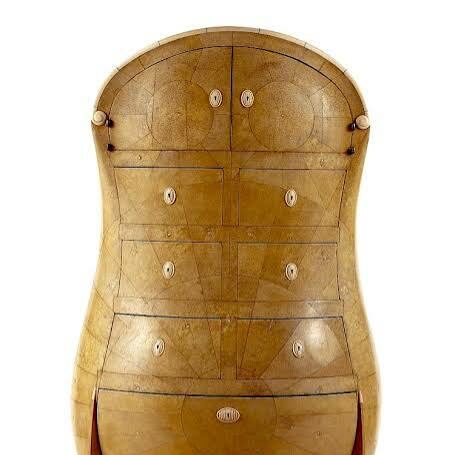
The same exposition unveiled André Groult’s chiffonnier, an anthropomorphic chest of drawers sheathed in white galuchat with ivory lock plates and feet, now held at the Musée des Arts Décoratifs in Paris and still one of the most recognizable silhouettes to come out of French Art Deco.
A third figure worth knowing is Jean Dunand, a Swiss-born, French-naturalized sculptor and lacquer artist. He contributed to the French Embassy pavilion at the 1925 exposition and decorated the smoking room of the ocean liner SS Normandie, carrying galuchat, lacquer, and ivory from private furniture into the world of transatlantic luxury travel.
Forgotten again, then found again
War has a way of ending decorative arts movements, and galuchat’s know-how faded once more after the 1920s and 30s. It took until 1985 for a cabinetmaker named Jérôme Cordié to rediscover the traditional sheathing techniques and develop new finishes of his own, including one known as samé-nuri doré. He went on to become a recognized specialist, eventually entrusted with restoring Art Deco furniture held in major museum collections, including the Rodin, Cognacq-Jay, Carnavalet, and Arts Décoratifs museums, and the Louvre.
The pattern repeats at nearly every stage of galuchat’s history: enthusiastic rediscovery, a golden age, then obscurity, until the next craftsman picks it back up.
Galuchat today
Outside France, the material is rarely called galuchat anymore. In English it goes almost exclusively by shagreen (shark and ray skin), or specifically stingray leather, and most people encountering it today have never heard the original French name at all. The vocabulary changed. The material didn’t.
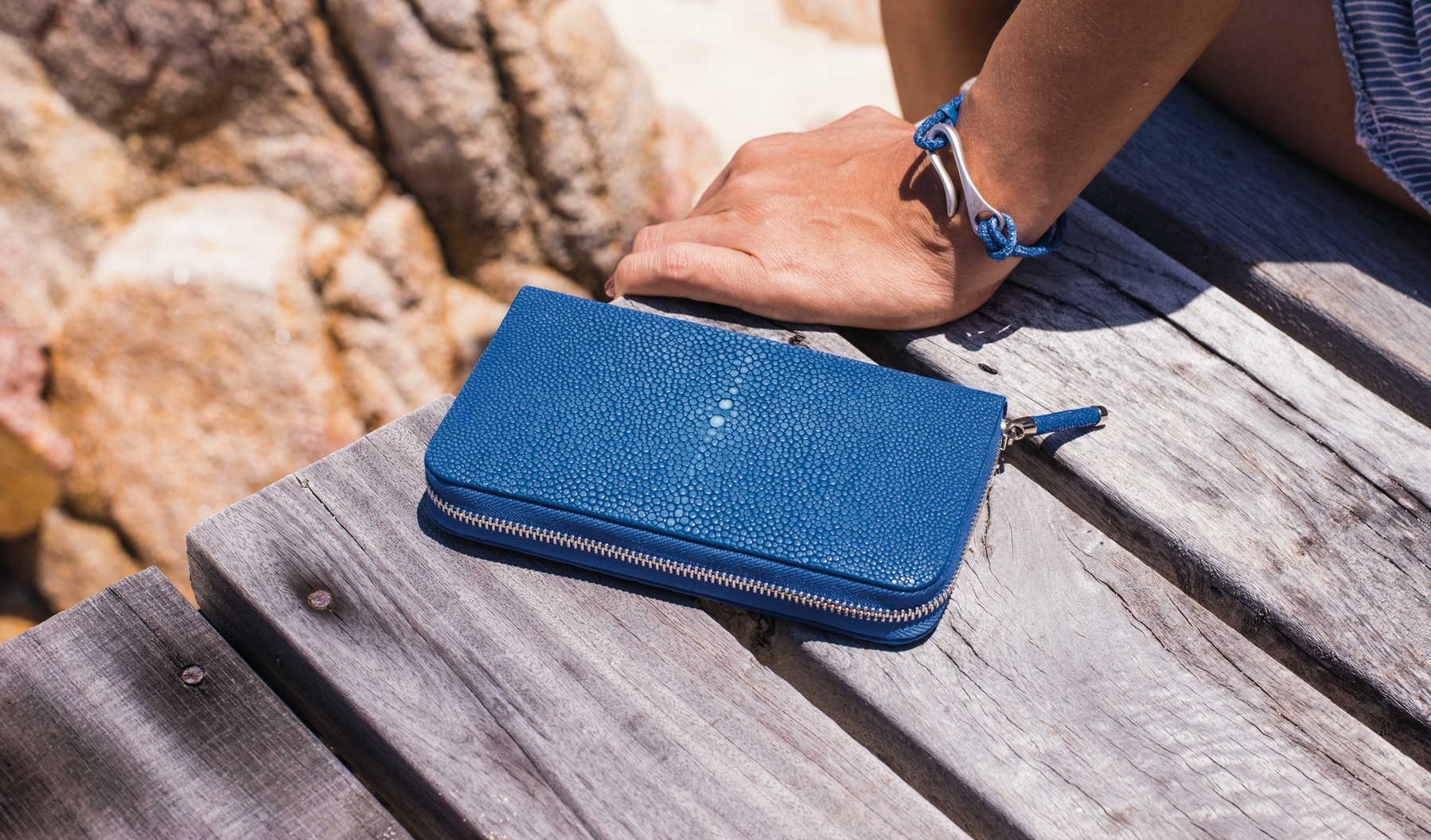
It shows up in a handful of specific corners. Interior design has probably done the most to keep it visible: the Paris label R&Y Augousti built its reputation on combining shagreen with brass, an aesthetic carried forward today by the founders’ daughter, Kifu Augousti, under her own label Kifu Paris. In leather goods, British house Alfred Dunhill has used stingray skin on flasks and lighters. And in watchmaking, it’s really only in the last decade or so that shagreen has established itself as a serious strap material alongside crocodile and ostrich, giving brands a texture calfskin can’t offer.
What makes it desirable now is the same thing that made it useful to a samurai: those calcified beads resist scratching and wear far better than most soft leathers manage. It’s a narrower world than mainstream fashion, closer to fine objects and exotic skins than to ready-to-wear runways, but that’s arguably part of what has kept it intact.
Where AKNAS fits into this history
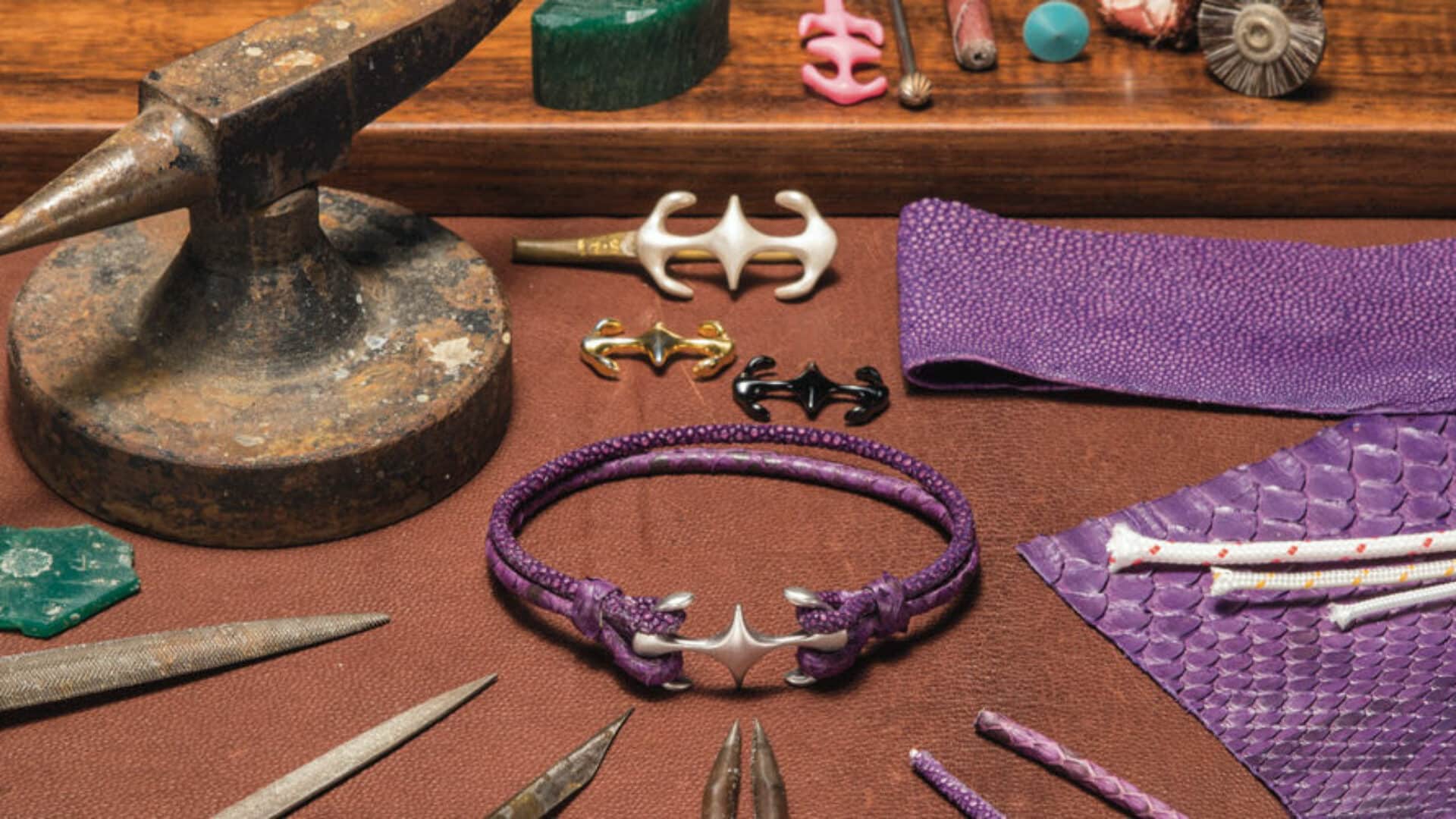
AKNAS continues this legacy. We call it galuchat rather than shagreen because, as a partly French house, that’s a name worth keeping alive. What makes galuchat worth specializing in is simple: few skins are this striking to look at, with a beaded texture that catches light, and few last as long. We selectively work with a stingray leather supplier who delivers galuchat rich in color, sanded and polished for a smoother touch. The hide is thin and flexible enough to make cutting and sewing considerably easier, but also strong enough to be used for years rather than admired for a season. That combination is what lets us build jewelry, accessories, and small leather goods, and sometimes furniture or decorative objects on request, like backgammon sets and boxes.
Two and a half centuries in, the galuchat craftsmanship hasn’t stood still, and neither have we.