
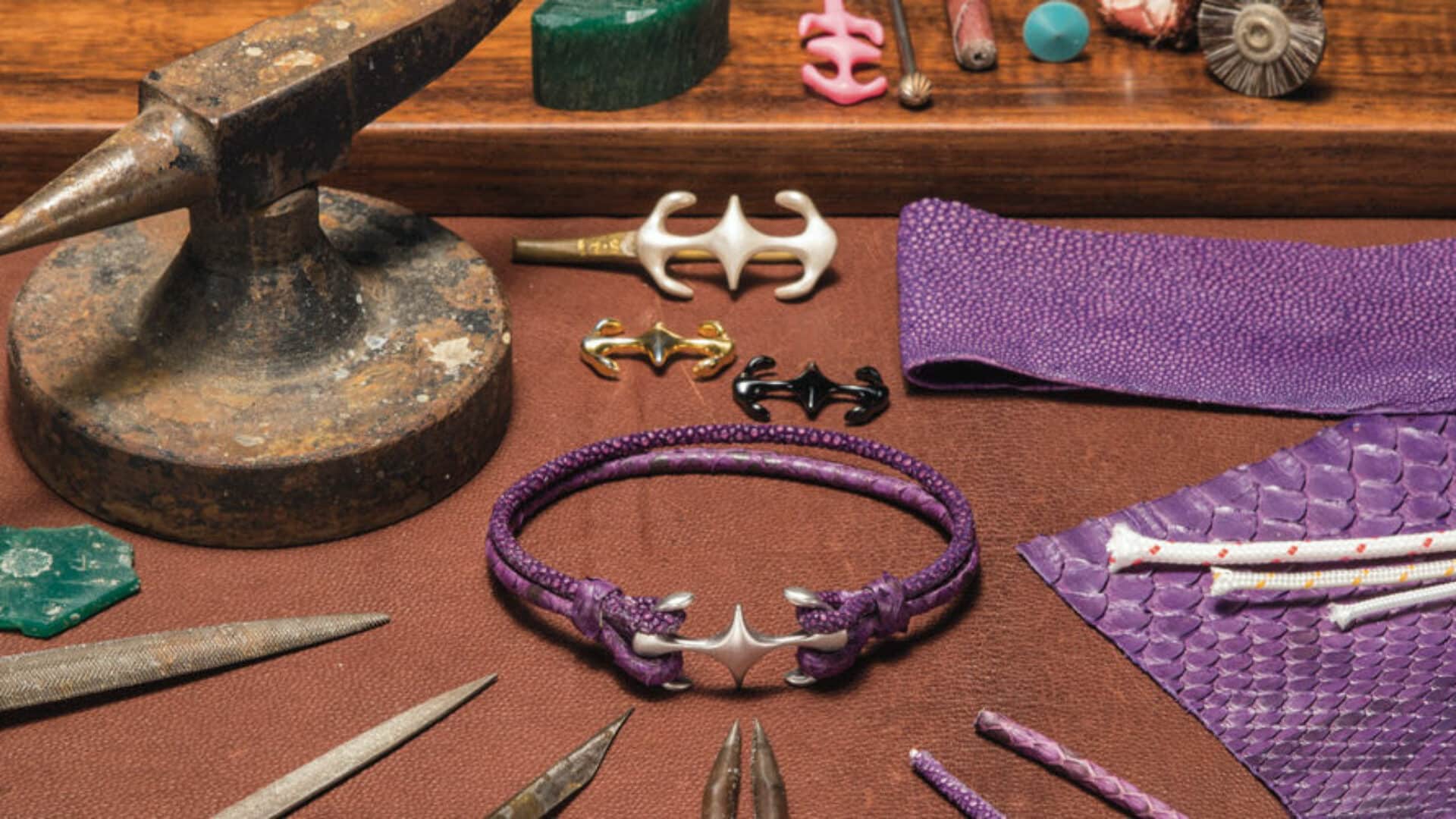
Stingray leather, known in French as Galuchat and in English as shagreen, has a distinctive place in luxury bag making. Its beaded surface, natural durability and the pale crown at the centre of each skin give a mini bag an identity few other materials can match.
It also means there is no single stingray bag price. Two mini bags of the same size can differ considerably in cost. The difference comes from the skins selected, how the design uses them, how the bag is built and how much development comes before production.
This guide explains where that cost comes from, drawing on more than 20 years of Galuchat manufacturing at the AKNAS workshop in Bangkok.
How Much Does a Stingray Leather Mini Bag Cost?
A genuine stingray leather bag can retail from several hundred to several thousand dollars, and more at the luxury end. That figure includes brand positioning, distribution, margins and marketing, so it says little about what the bag actually costs to make.
For a brand, the more useful question is what specification sits behind a stingray leather bag price. A simple stingray clutch and a structured top-handle mini bag may be similar in size. Yet the first needs a few skins and straightforward assembly, while the second needs matched skins, reinforcement, a leather lining and custom hardware.
AKNAS ODM Pricing for Stingray Leather Mini Bags
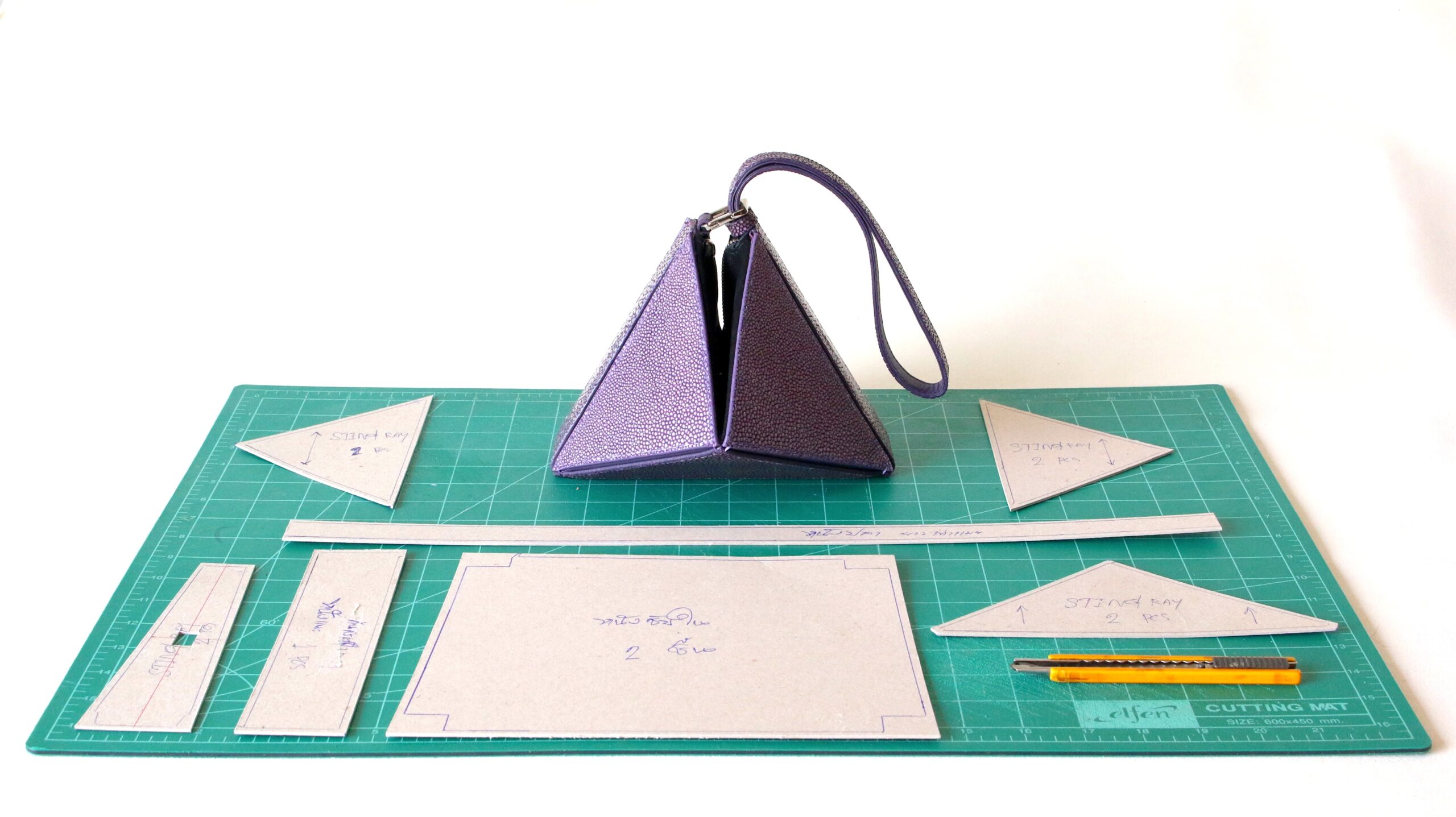
Brands working with AKNAS through ODM (Original Design Manufacturing), where a design is chosen from the existing catalogue and personalised, manufacturing prices for stingray leather mini bags typically range from $350 to $600 per bag. Where a project sits within that range depends on the model, size and specification.
This range applies to mini bags made in Galuchat, the stingray leather that is AKNAS’s signature material. It is based on a minimum order quantity of 6 or 12 pieces, depending on the design, and it is a manufacturing price for the brand rather than a retail price.
The range does not include research and development or pattern development. These costs apply when a new design is created from drawings, photographs or a sample under OEM (Original Equipment Manufacturing), and they are quoted separately once the specification has been confirmed.
The sections below explain the factors that move a mini bag towards the lower or upper end of the range.
What Affects the Price of a Stingray Leather Mini Bag?
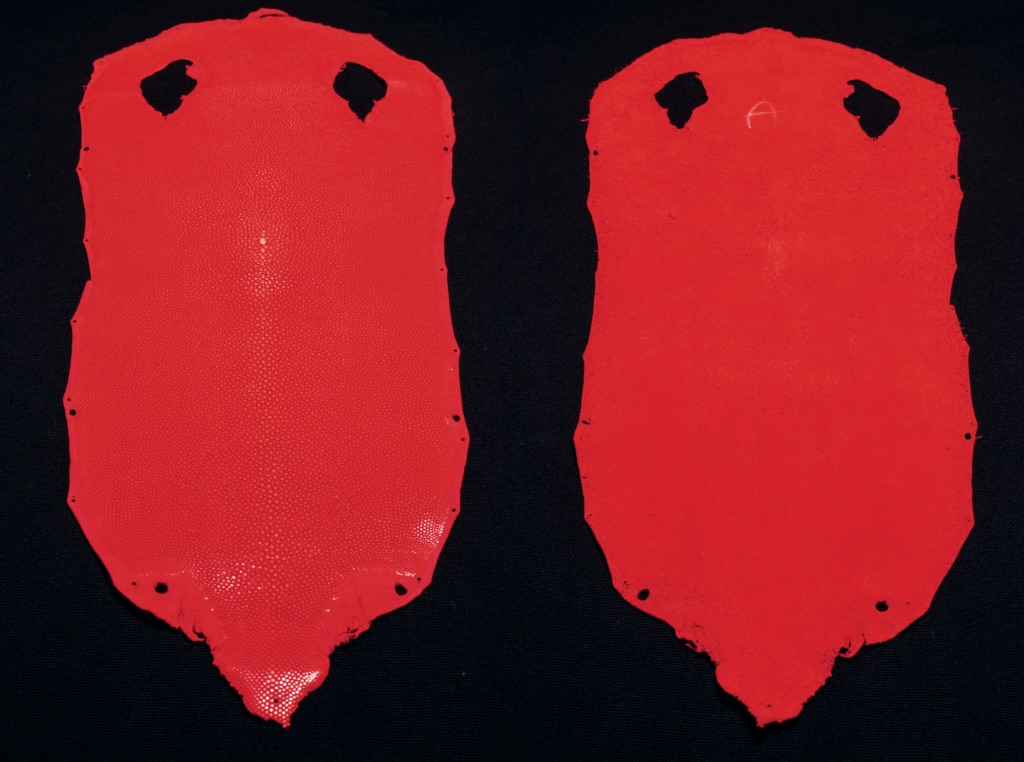
The stingray itself is one of the largest parts of the cost, and “genuine stingray leather” alone says little about it. Skin size, grade, yield and placement all decide how much material a bag needs and how efficiently it can be used.
1. Stingray Skin Size and Quality
A stingray skin offers a much smaller working area than a bovine hide, and its rounded shape limits where large pattern pieces can be placed. A design with broad, uninterrupted panels needs larger skins. Large skins of high grade are harder to source and cost more.
Grade matters as much as size. For luxury production, a skin has to do more than be usable. The evenness of the beading, the condition of the surface and the appearance of the crown all need to meet the visual standard of the collection.
2. Crown Placement and Skin Yield
Each skin has only one central crown, so a bag showing crowns on the front, back and flap needs a separate skin for each. Once a crown is fixed in position, the remaining pattern pieces are arranged around it rather than wherever they fit most efficiently, which reduces yield.
Stingray’s hard, textured surface also demands skilled cutting. Keeping a consistent appearance across a collection means visual balance sometimes takes priority over material efficiency.
3. Bag Structure and Interior
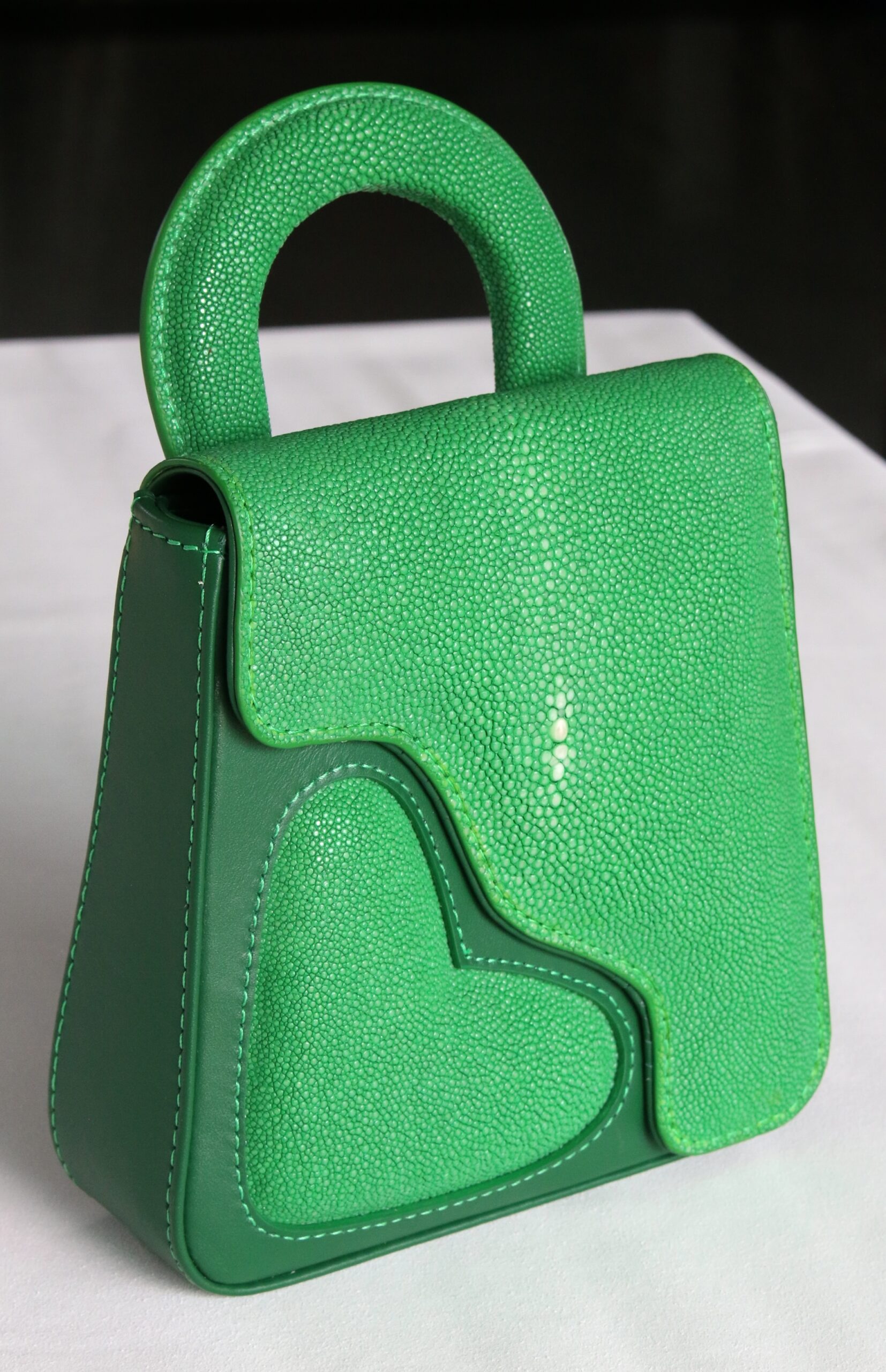
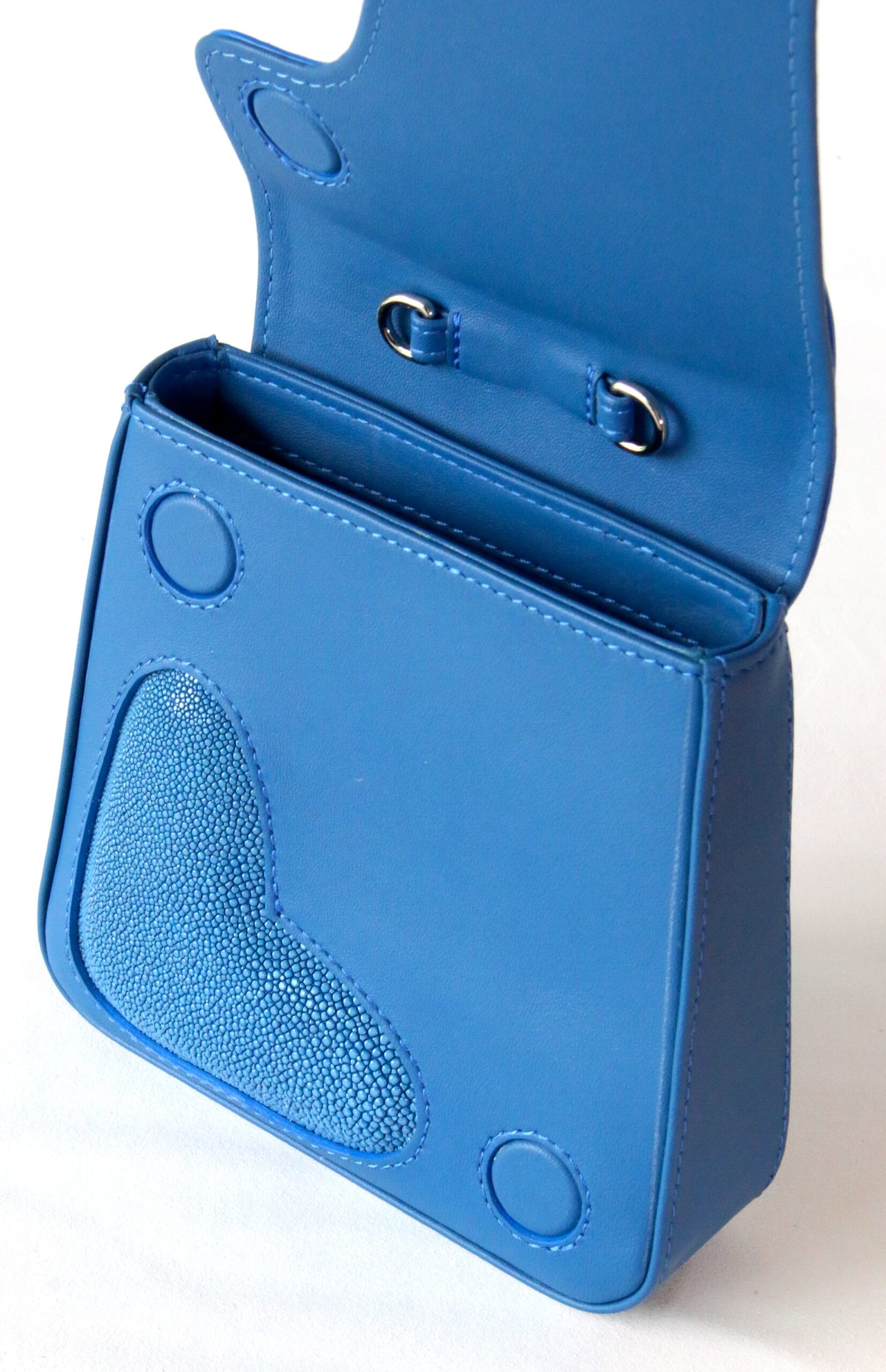
Structured bags rely on components that disappear once the bag is finished. These include reinforcements for the base, sides and handles, and layers that must be skived and aligned so the bag holds its shape without feeling heavy. Gussets, curved panels, detachable straps and specialised closures each add pattern pieces and assembly stages.
The interior follows the same logic. A full leather lining costs more in material and preparation than a textile one, and zipped pockets, card sections and dividers all add work. In a luxury piece, the quality should continue when the bag is opened, so the interior belongs in the original specification rather than being decided at the end.
4. Full Stingray Construction vs Leather Combination
A mini bag can use stingray throughout its exterior or combine it with premium leather on selected panels. A predominantly stingray exterior generally requires more skins and specialised handling, while mixed materials can reduce consumption and create textural contrast.
The secondary leather’s grade, thickness, finish and colour must complement both the stingray and the bag’s construction. The choice depends on where stingray adds the most value to the design.
5. Hand Finishing and Craftsmanship
Much of what makes a stingray bag feel refined is invisible on its own. At AKNAS this includes precise skiving, handmade Galuchat grooves and multi-stage hand edge finishing with a primer and three polishing stages. Stitching must stay even where stingray meets smoother leather, and hardware must sit without distorting the material around it. Stingray’s hard, beaded surface makes each of these steps more demanding, and the time involved is a real part of the price.
How Custom Development Affects Stingray Mini Bag Price
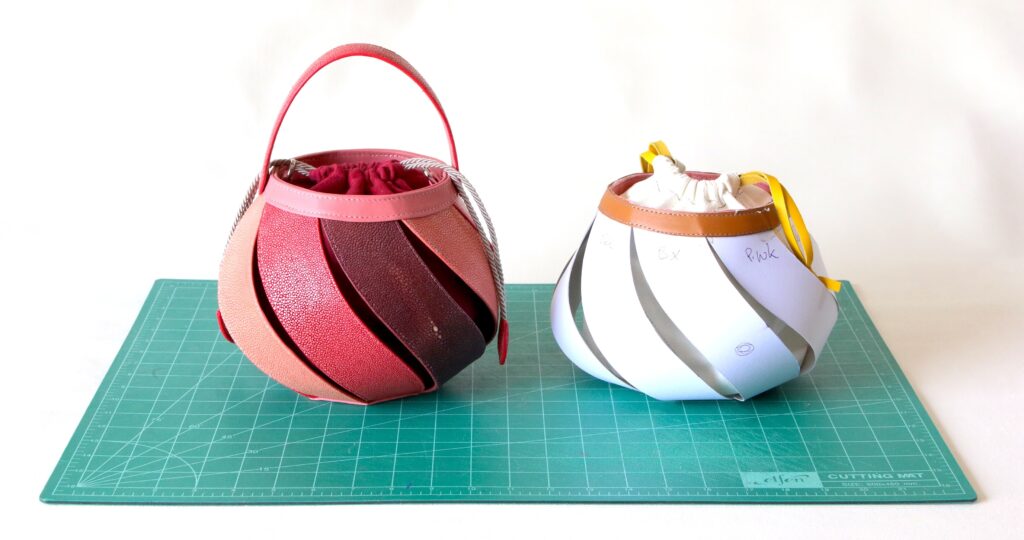
1. Sampling and Development
A new design moves from drawing or concept to a prototype. The prototype lets the brand check proportions, structure, handle length, closure position and how the materials work together.
Revisions are normal at this stage. Moving a flap by a few centimetres or repositioning the crown can look minor on paper but changes pattern placement and skin consumption. ODM designs avoid most of this work because the pattern and construction already exist.
2. Where Customisation Adds Value
Customisation can include colour from AKNAS’s collection of 32 deep-dyed Galuchat colours, as well as finishes, branded hardware, tailored linings, edge colours and a stamped logo. Nothing needs to be removed to control cost. The aim is to invest where it matters most. A distinctive custom closure, for example, often does more for a product’s identity than several small branded components that are rarely seen.
3. Order Size and Skin Availability
Larger orders spread fixed costs such as patterns, samples and hardware moulds across more pieces. AKNAS keeps entry quantities low, so a brand can introduce a stingray bag without committing to large volumes.
The limit on scale is often the material itself. A larger run needs more skins that match in size, colour and grade, and designs built around prominent crowns or matched panels become harder to keep consistent as quantities rise. Typical production lead time is 45 to 90 days.
How to Compare Stingray Mini Bag Manufacturing Quotes
A stingray skin bag price is only comparable when the specifications behind it match. Two manufacturers can quote very different figures for what looks like the same bag. Differences usually come from several sources:
- Stingray skin grade, size and finish
- Expected number of skins per bag
- Secondary leather and other exterior materials
- Interior lining and construction
- Hardware specification
- Reinforcement and structural components
- Edge and surface finishing
- Logo and branding applications
- Sampling and development, including pattern development
- Production quantity and minimum order
- Individual and export packaging
When one quote is much lower, the useful question is which of these decisions explains the gap, not simply whether the price can come down further.
What Information Is Needed for a Stingray Mini Bag Quote?
The more complete the initial brief, the more accurately a manufacturer can assess the project. Ideally, a request for quotation should include:
- Drawings, technical files or clear reference images
- Finished dimensions
- Preferred stingray colour and finish
- Desired position of the stingray crown, if relevant
- Secondary leather or material preferences
- Lining specification
- Hardware requirements and preferred finish
- Logo and branding details
- Internal compartments and functional features
- Estimated order quantity
If some of these are still open, they can be resolved during development, and the estimate refined as the specification is confirmed.
Developing a Custom Stingray Leather Mini Bag
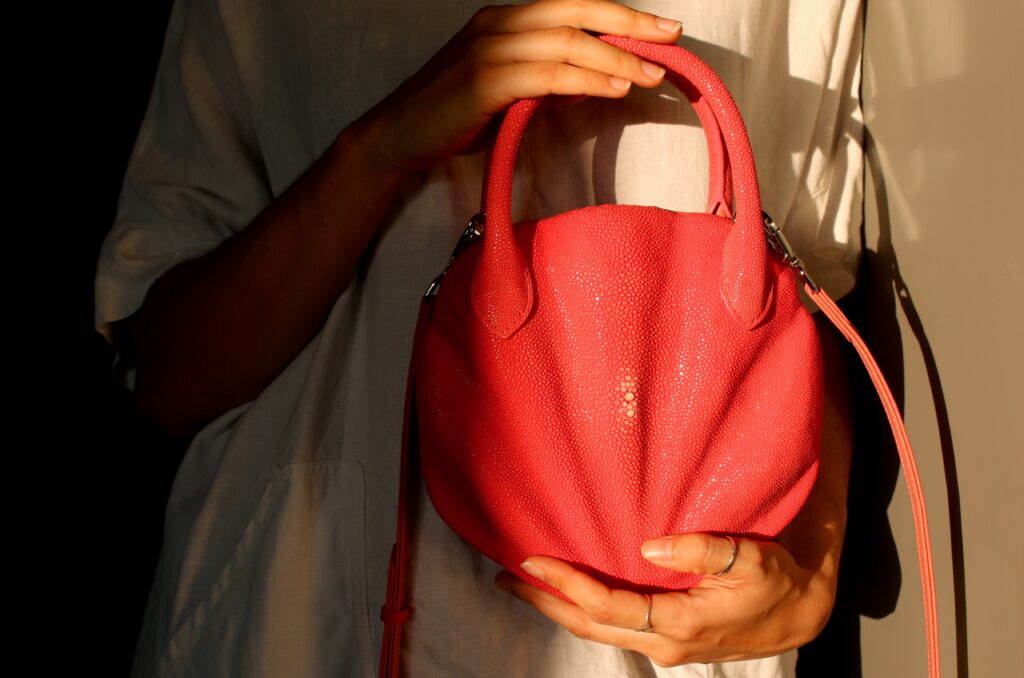
Stingray works best when its character shapes the design from the start. That means deciding where the crown sits, how it meets other leathers and how the structure supports it. These choices influence the stingray bag price together, so they are best considered as a whole rather than each reduced to the lowest unit cost.
AKNAS works with brands to develop and manufacture custom stingray leather bags, from material selection and sampling to construction, custom details and production. With ODM stingray leather bags starting from $350 per piece, it is also a practical way to bring an exotic leather bag into a new collection. If you are developing a stingray bag, contact AKNAS to discuss your design, specifications and production requirements.
Pricing note: Prices shown in this article are approximate and provided for general guidance only. Please contact our team for current pricing based on your design and production requirements.